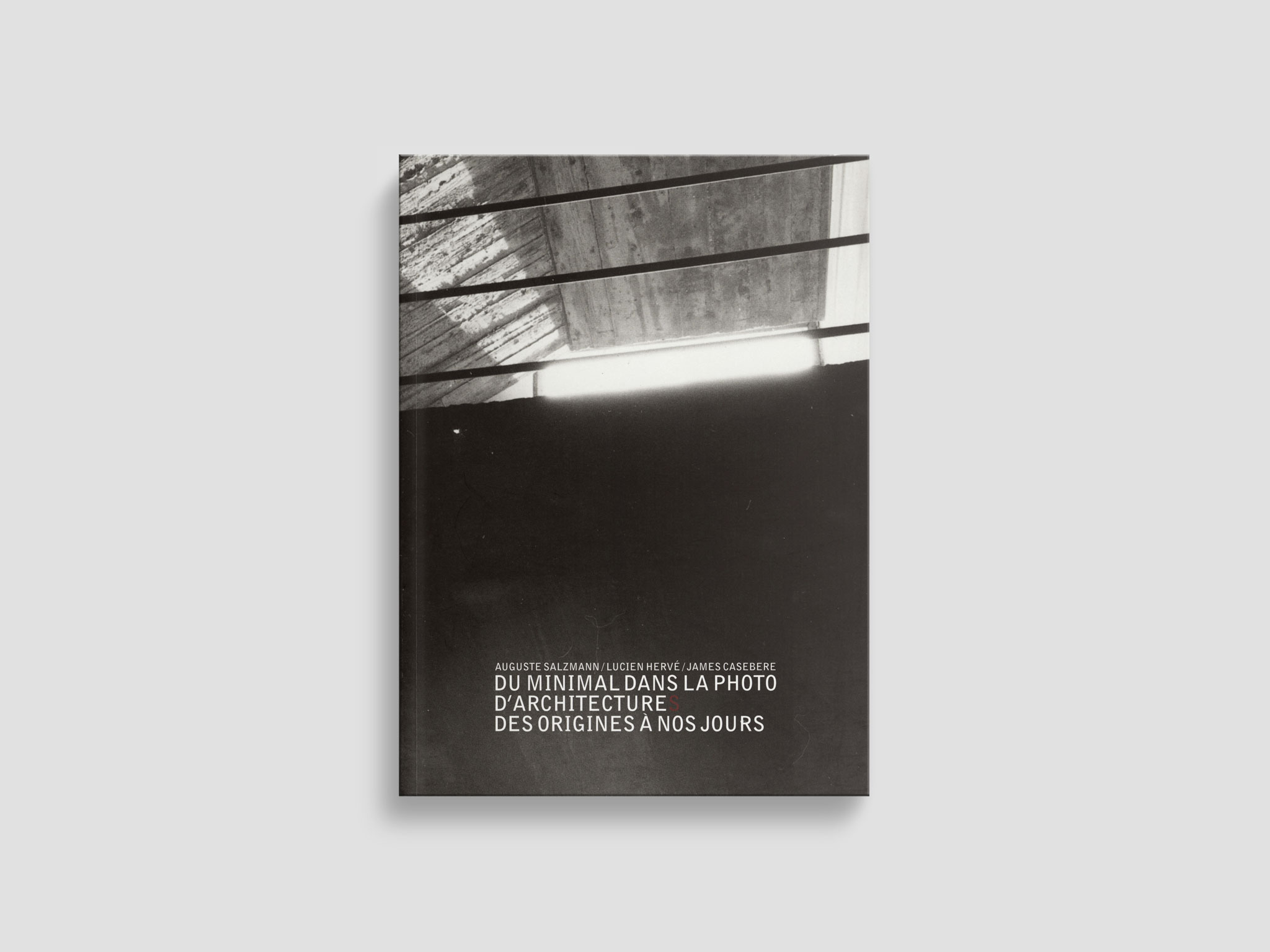
Three photographers, three eras, three visions.
Auguste Salzmann in Jerusalem in 1854.
A century later, Lucien Hervé at Thoronet Abbey, Le Corbusier’s Cité Radieuse, or facing anonymous walls in a Parisian suburb.
Currently, James Casebere and his models of imaginary architectural spaces.
Beyond their individual specificities, their works attest to common concerns: pared-down images, at times to the extreme, an absence of the picturesque, tight framing, and a priority given to the rendering of volumes, materials, and light.
The image tends towards abstraction, sublimating the “almost nothing”.
These three works, to varying degrees of engagement, attest to a pure artistic approach that transcends the formal framework of photography.
Hervé, in the preface to his catalog “Beauty is in the Street” in 1970, summarized this concept with a phrase “… the beauty of the insignificant and its relationship with the birth of contemporary art”.