
Armand-Albert RATEAU (1882-1938)
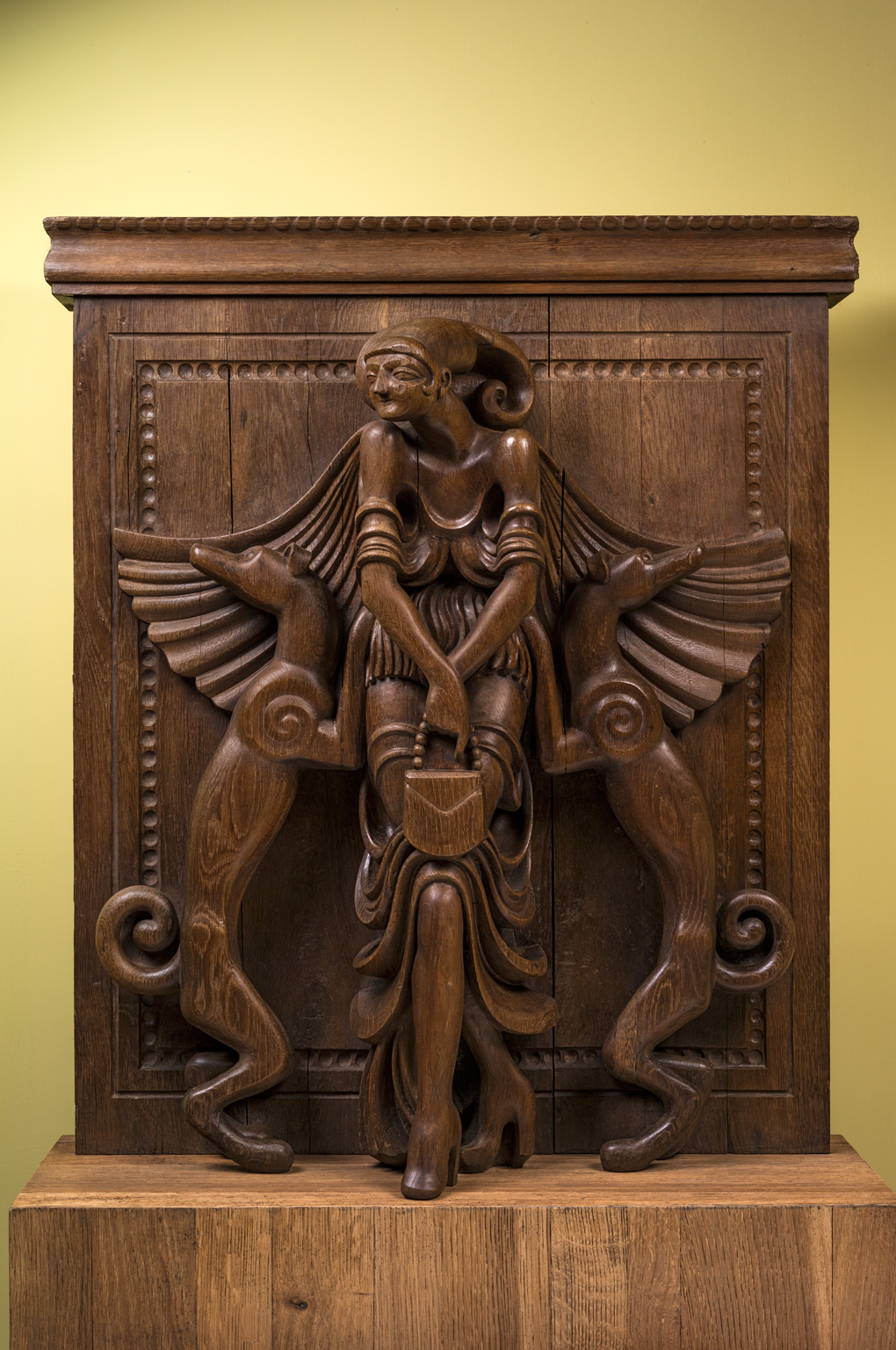
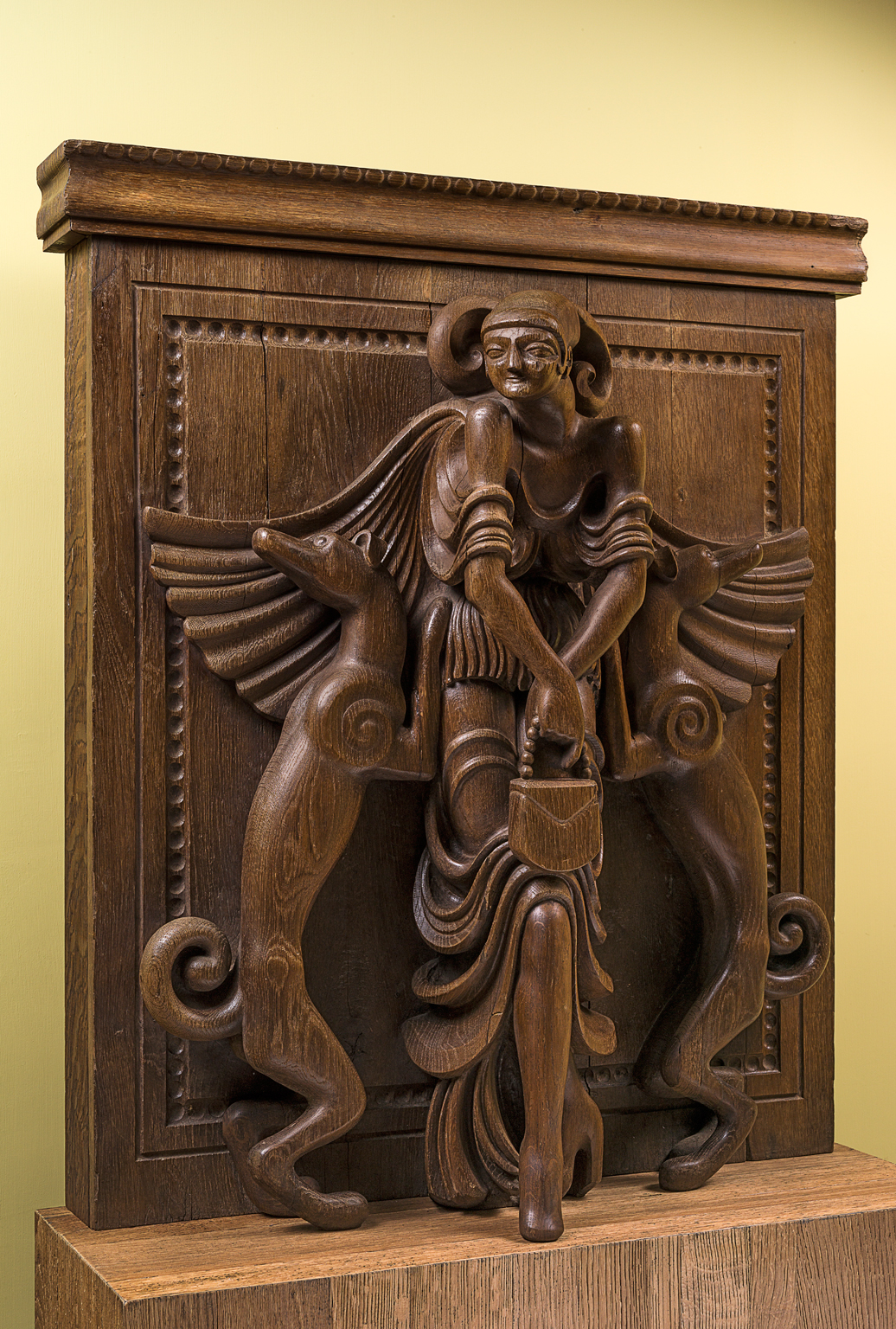
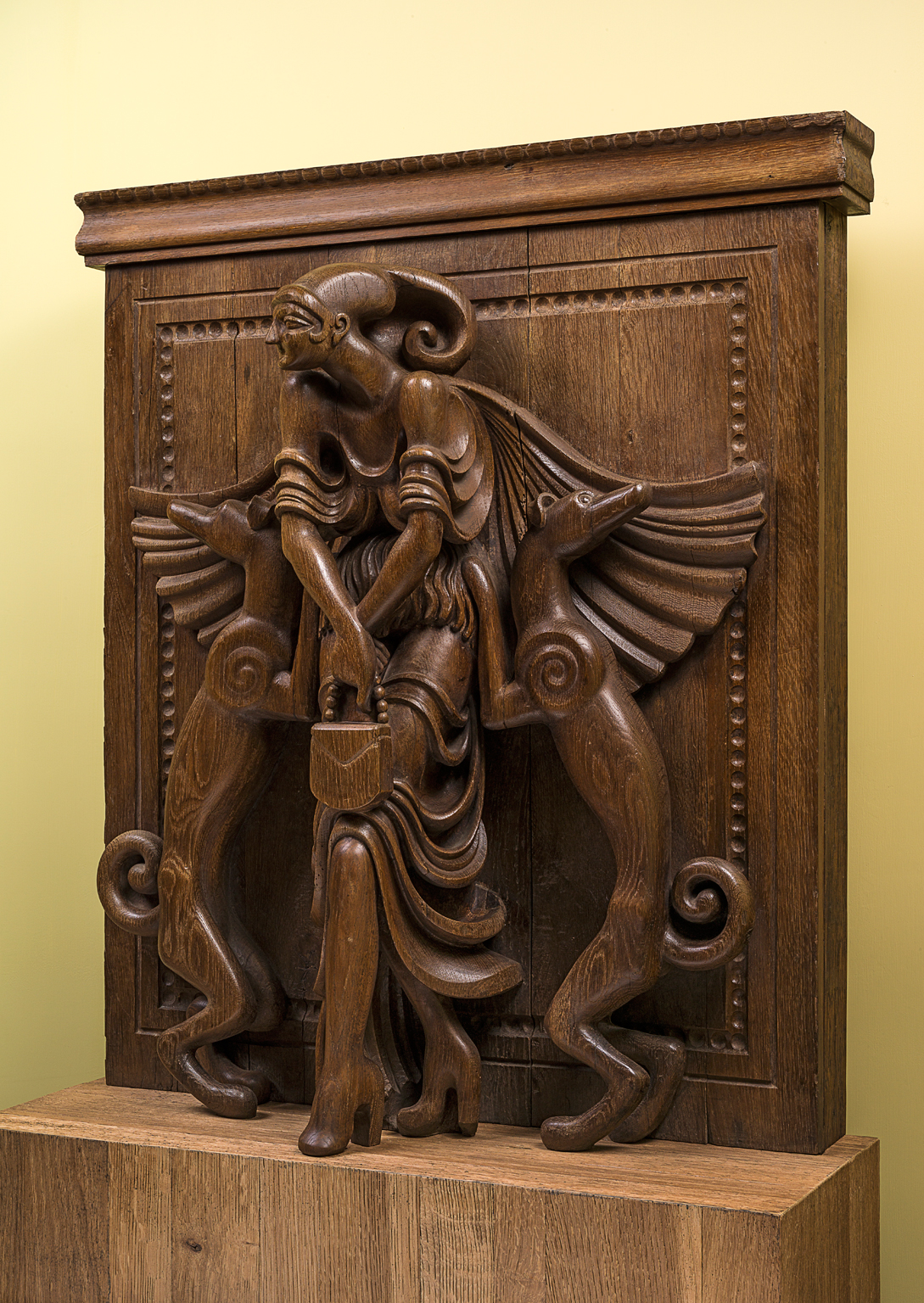
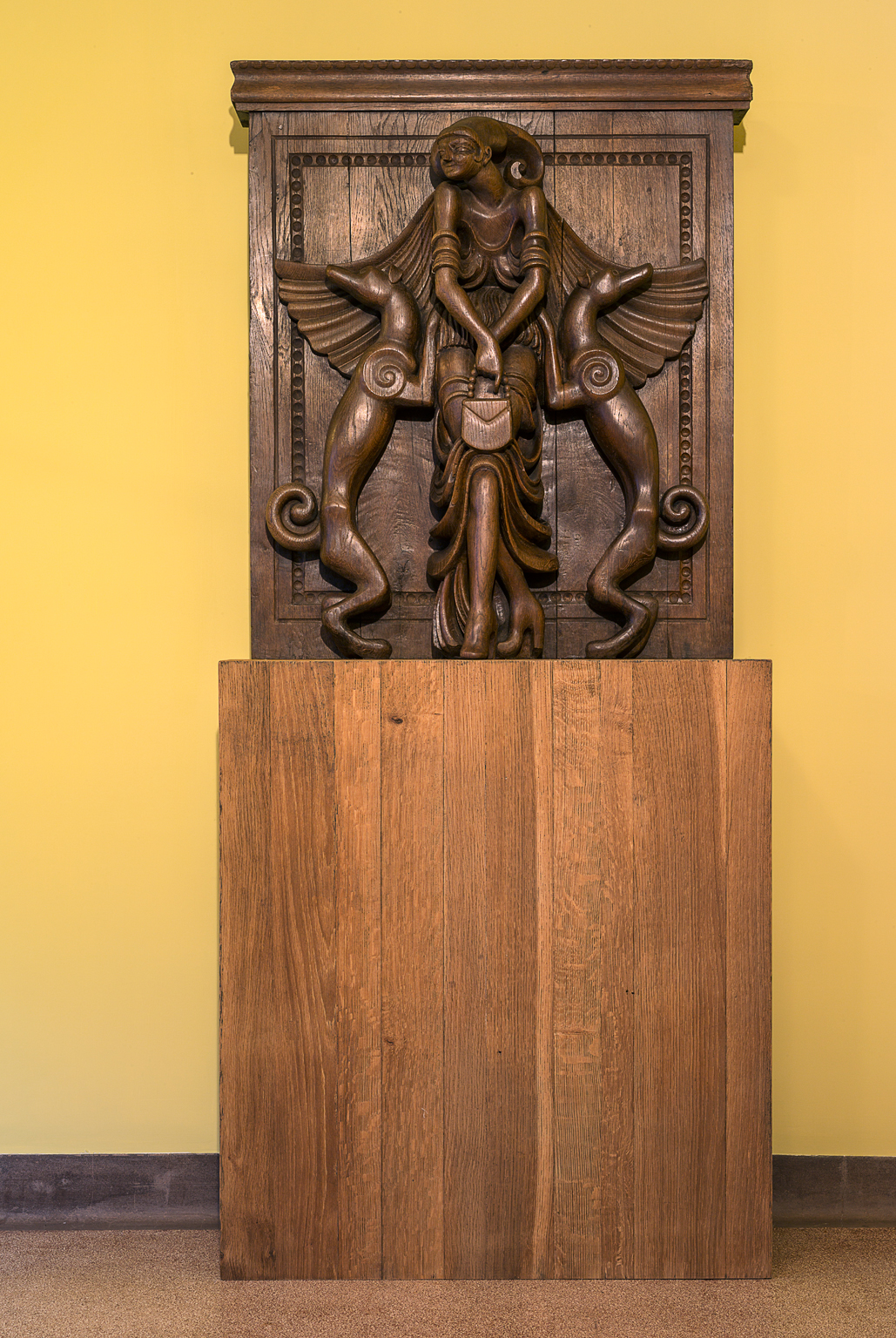
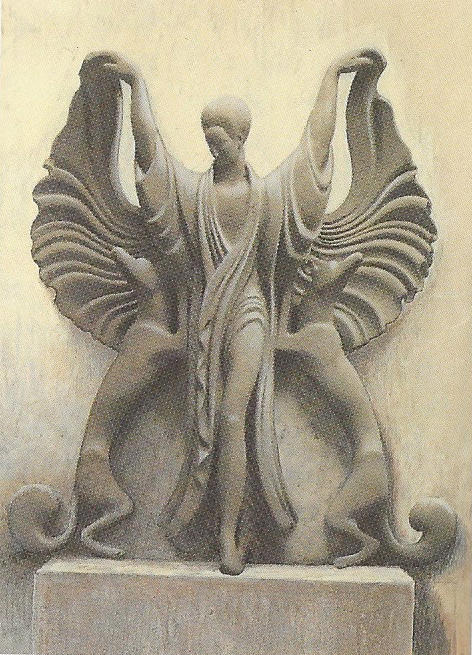
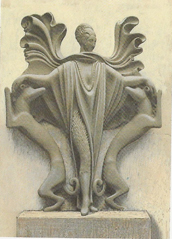
Jeanne Lanvin relief with greyhounds, 1921
Solid oak carved in high relief.
Dimensions of the original relief: height 99 cm – length 86 cm – depth 30 cm.
Brushed solid oak base remade to the proportions of the missing original base, 97 x 86 x 31 cm.
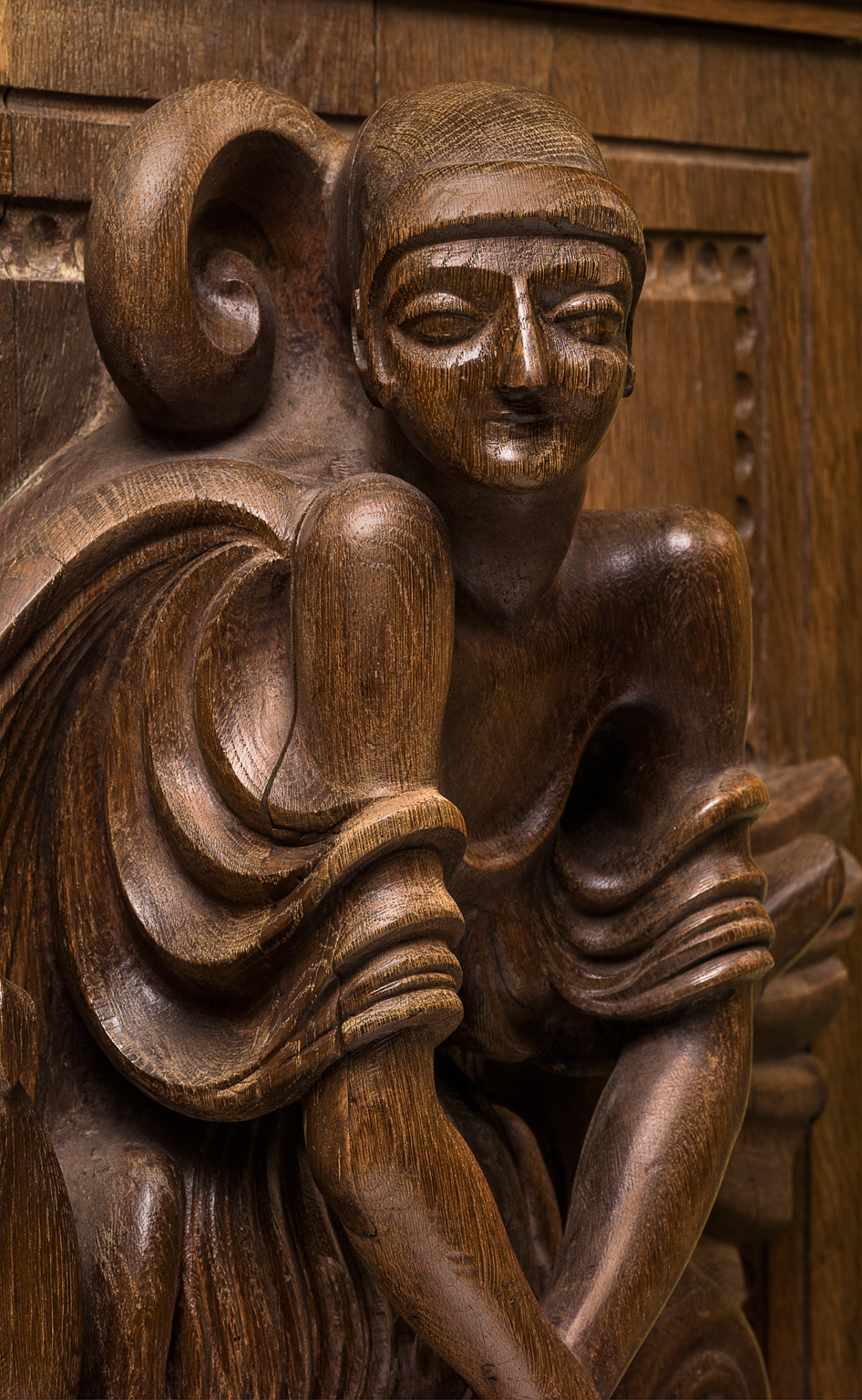
Relief designed by Armand-Albert Rateau and carved by Paul Plumet, his close collaborator, depicting a costumed woman framed by two greyhounds rearing up on their hind legs.
The genesis and continued use of this motif embody the consistency of Jeanne Lanvin’s tastes, blending modernity and classicism.
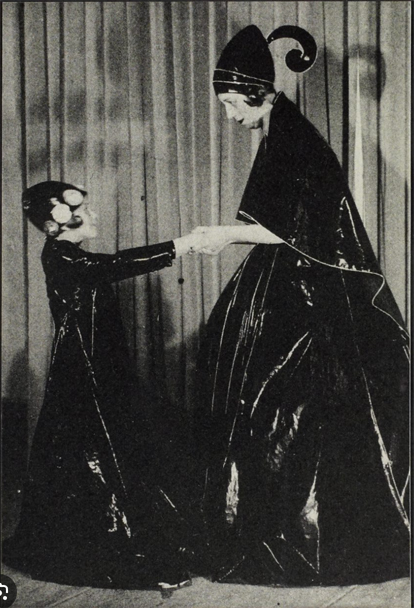
In 1907, as Jeanne Lanvin and her daughter Marguerite attend a costume ball, dressed in gowns and headdresses evoking fairy costumes or noble medieval ladies, the mother and daughter, holding hands and facing one another, are immortalized by an unknown photographer—yet the staging, like the costumes, was carefully prepared by Jeanne Lanvin, who would keep the photograph dearly. (see photo)
In 1920, on the occasion of an event organized by couturier Paul Poiret, Jeanne Lanvin meets the already renowned architect-decorator Armand-Albert Rateau, newly graduated from the prestigious École Boulle.
They decide to create together a vast exhibition space dedicated to the art of living at 15 rue du Faubourg Saint-Honoré.
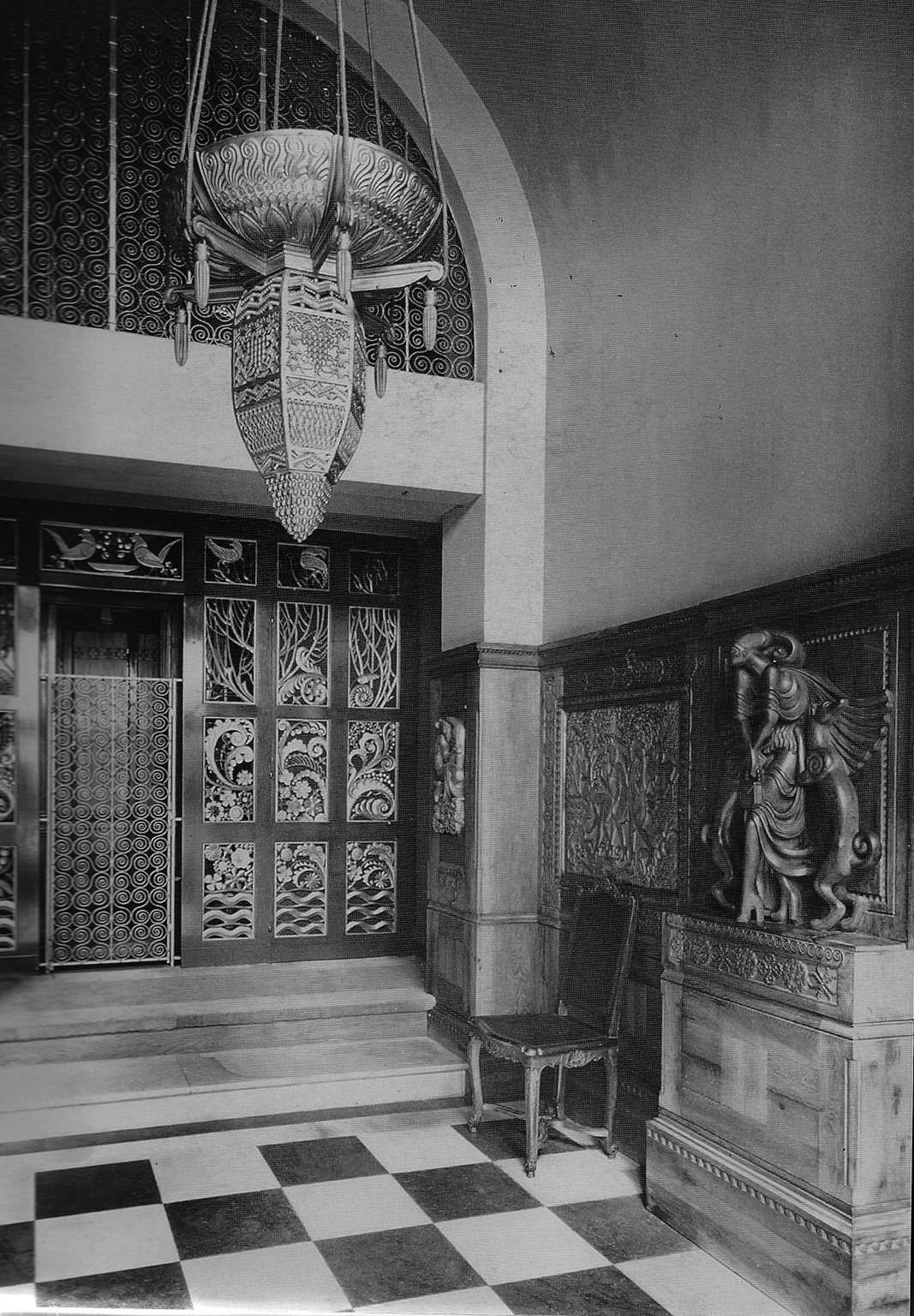
The boutique, inaugurated in 1921, offers furniture, rugs, curtains, stained glass, wallpapers… in the emerging Art Deco style, but above all in Rateau’s own style, strongly marked by historicism.
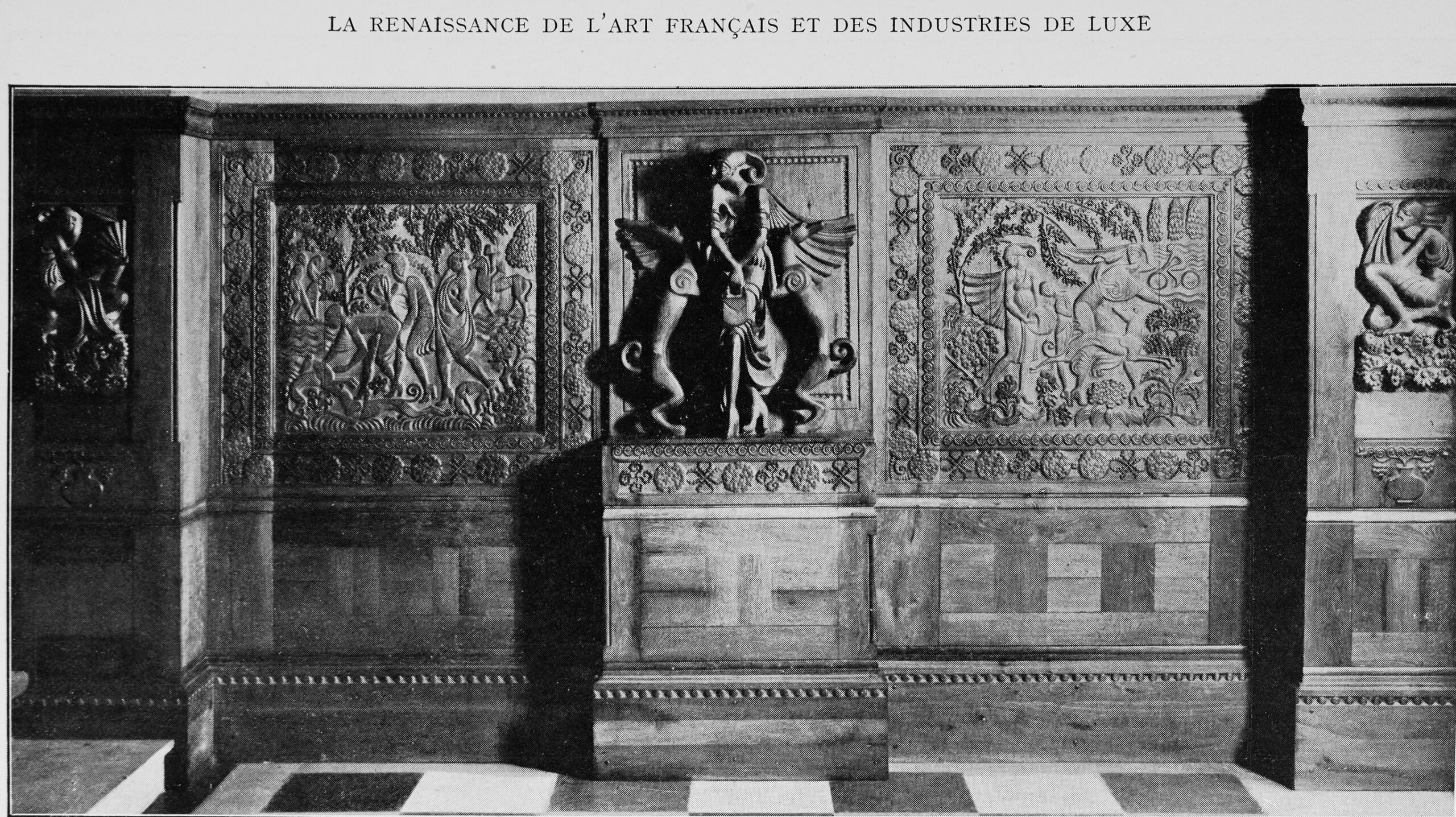
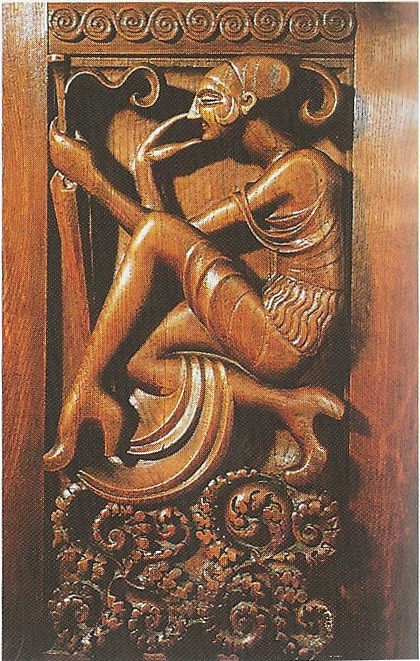
For the decoration of the entrance hall, Rateau, attentive to Jeanne Lanvin, interprets the 1907 photograph, retaining her headdress inspired by the medieval double-horned hennin, as well as the short cape covering her shoulders, to create this high relief as well as several bas-reliefs set into the wood paneling covering the walls. (see photos)
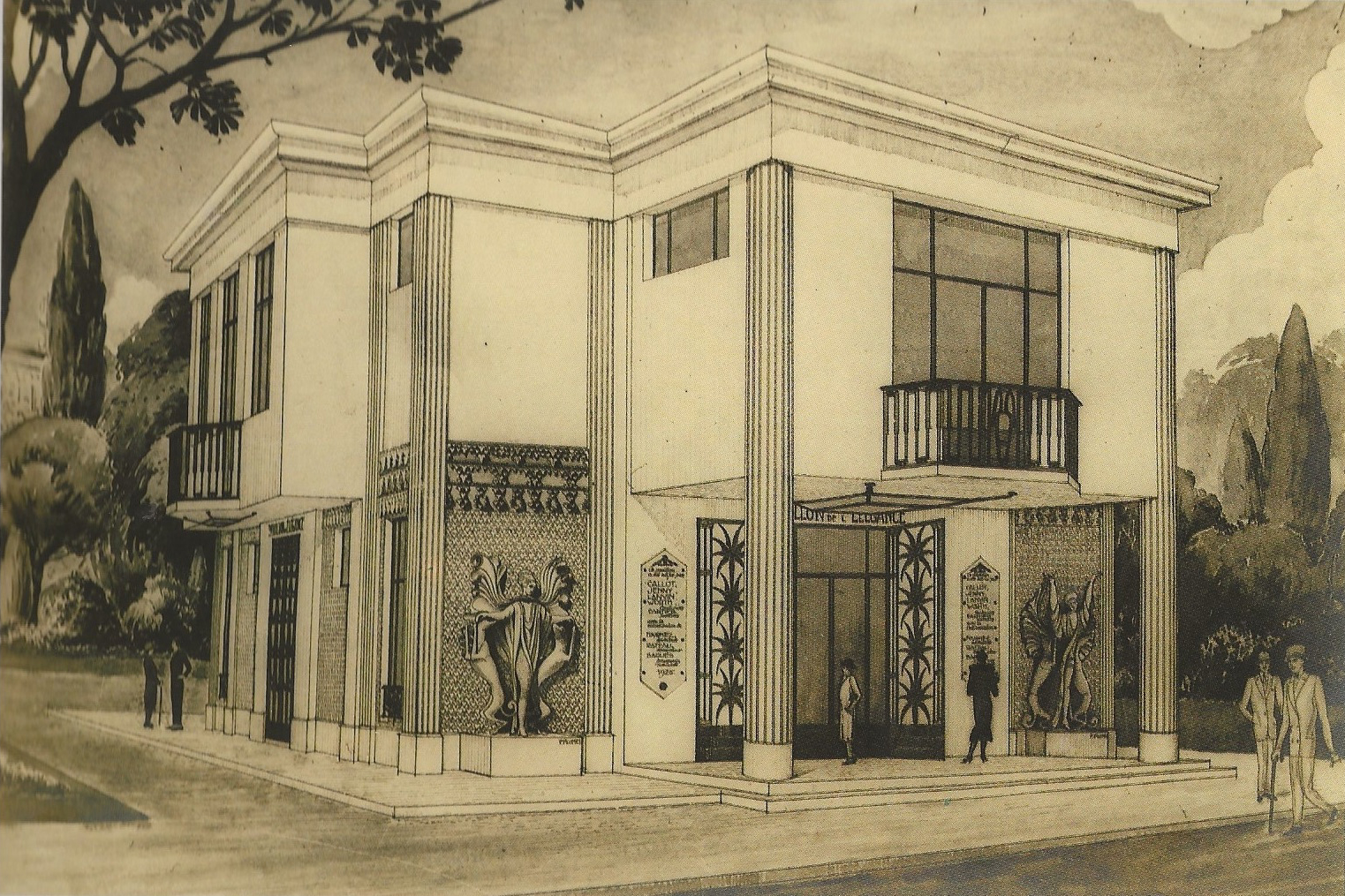
This theme of the modern woman framed by two greyhounds would be taken up again by Rateau for the Pavilion of Elegance, housing the couturiers Lanvin, Worth, Jenny, Callot as well as jeweler Cartier, at the 1925 International Exhibition of Modern Decorative and Industrial Arts, at the entrance door framed by two high reliefs also carved by Paul Plumet. (see photos)
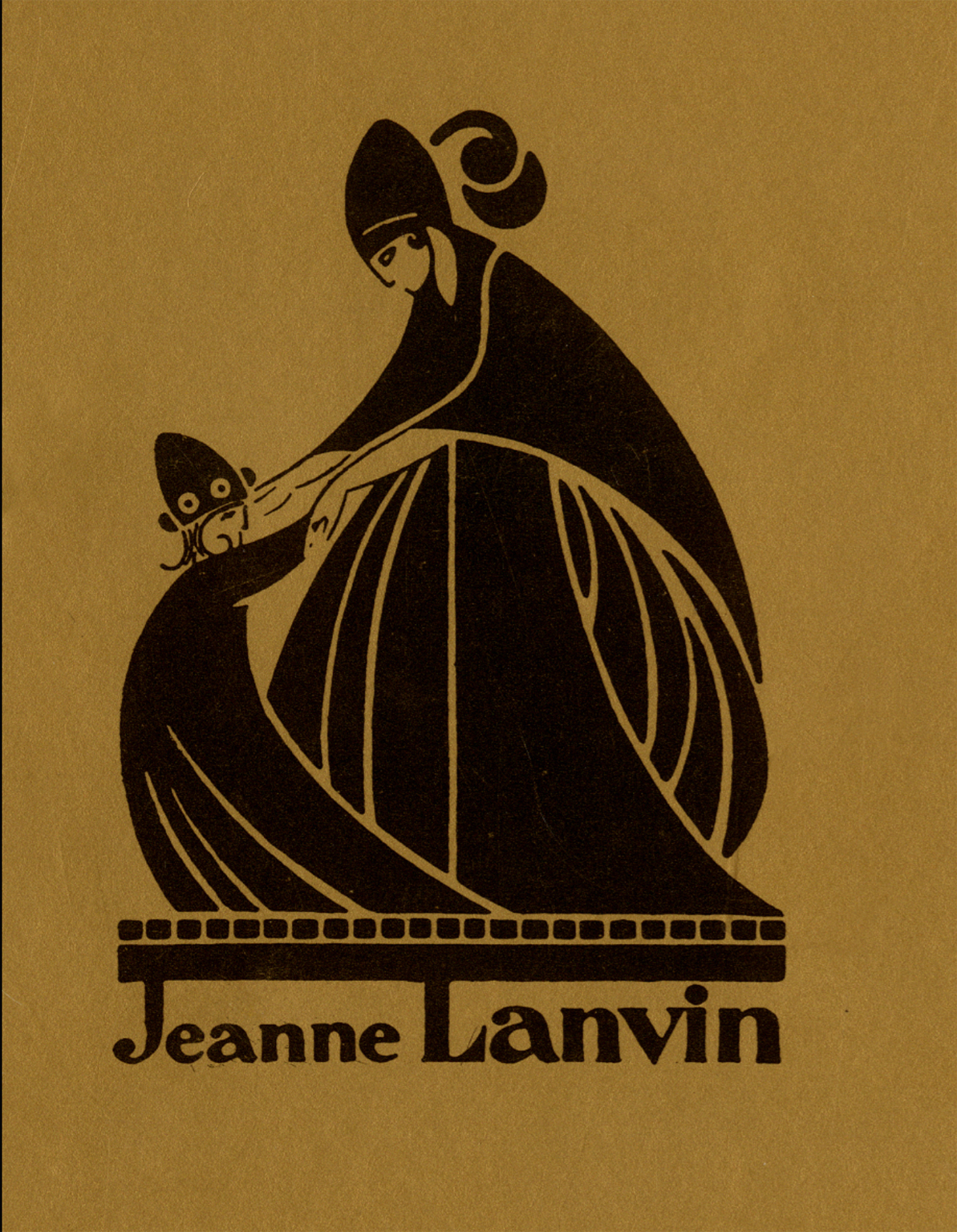
In 1923, the 1907 photograph would be used, far more faithfully, by the brilliant illustrator and creator of unique furniture, Paul Iribe, to create the Lanvin brand logo. (see photo),
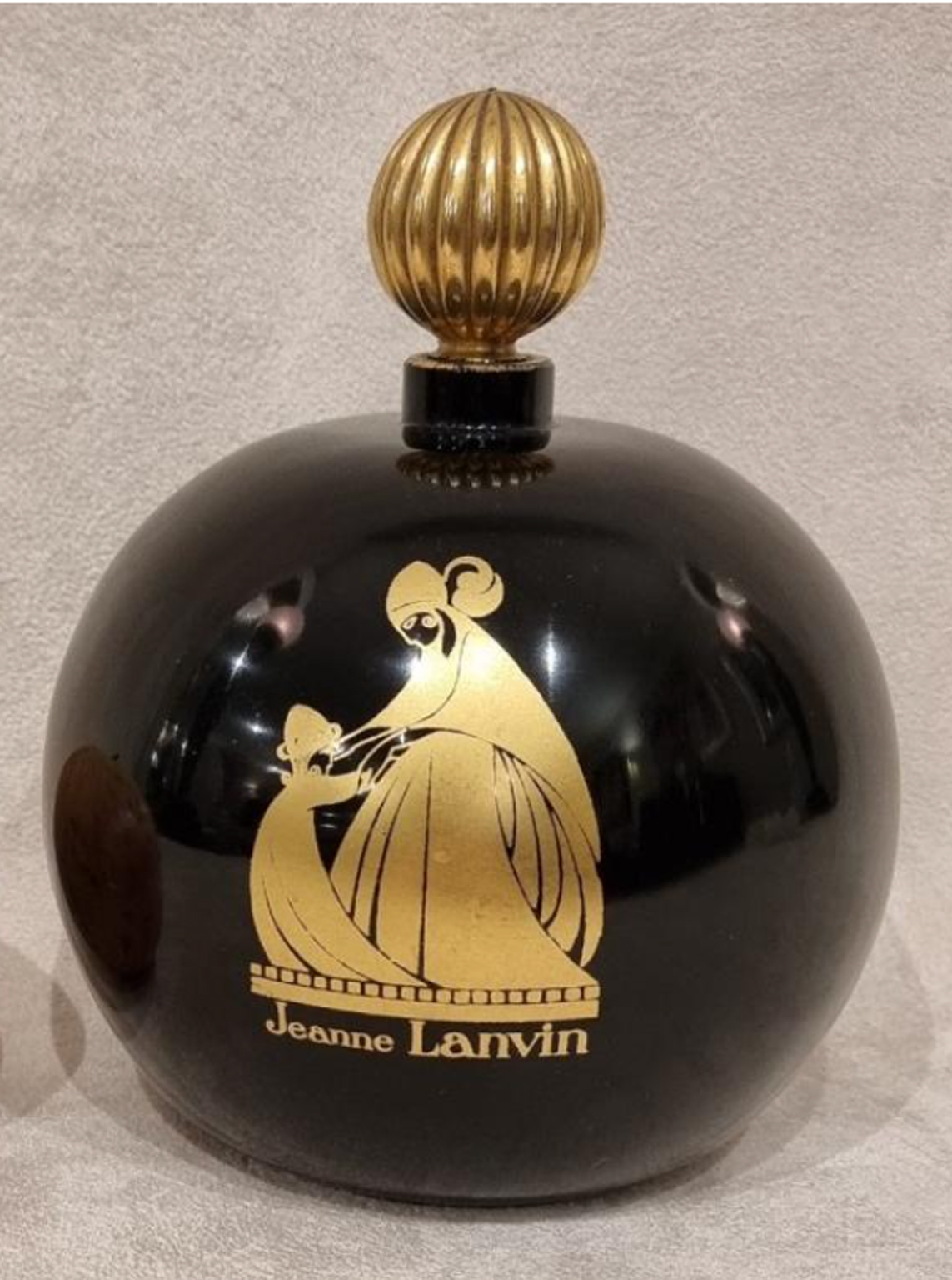
In 1927, Rateau would design the iconic Arpège perfume bottle for Jeanne Lanvin, decorated with this gold logo on a black background. (see photo).
The modernity of the attitude and the provocative outfit of this “Amazon” with harsh features—an image of the free, independent, audacious woman, breaking with traditional conventions of femininity; wearing ankle boots with exaggerated heels, a form-fitting dress revealing shoulders and legs above the knee (and far above for the wall reliefs), over which is slipped at the waist a kind of feathered mini-skirt foreshadowing the banana belt first worn by Josephine Baker at the Folies Bergère in Paris in 1926, the small handbag thrust forward… all these elements make it a highly original work, attesting to the avant-garde nature of Lanvin’s creations from the early 1920s, heralding the fashion of the garçonne even before the publication of the eponymous novel in 1922, yet already in the air of the times with figures such as Colette, Kiki de Montparnasse, or Josephine Baker.
Bibliography:
– La Renaissance de l’art français et des industries de luxe, June 1924.
– “Décoration et haute couture” (Hélène Guéné. Les Arts Décoratifs, 2006), in which this work is reproduced in situ on pages 22 and 23.
Available