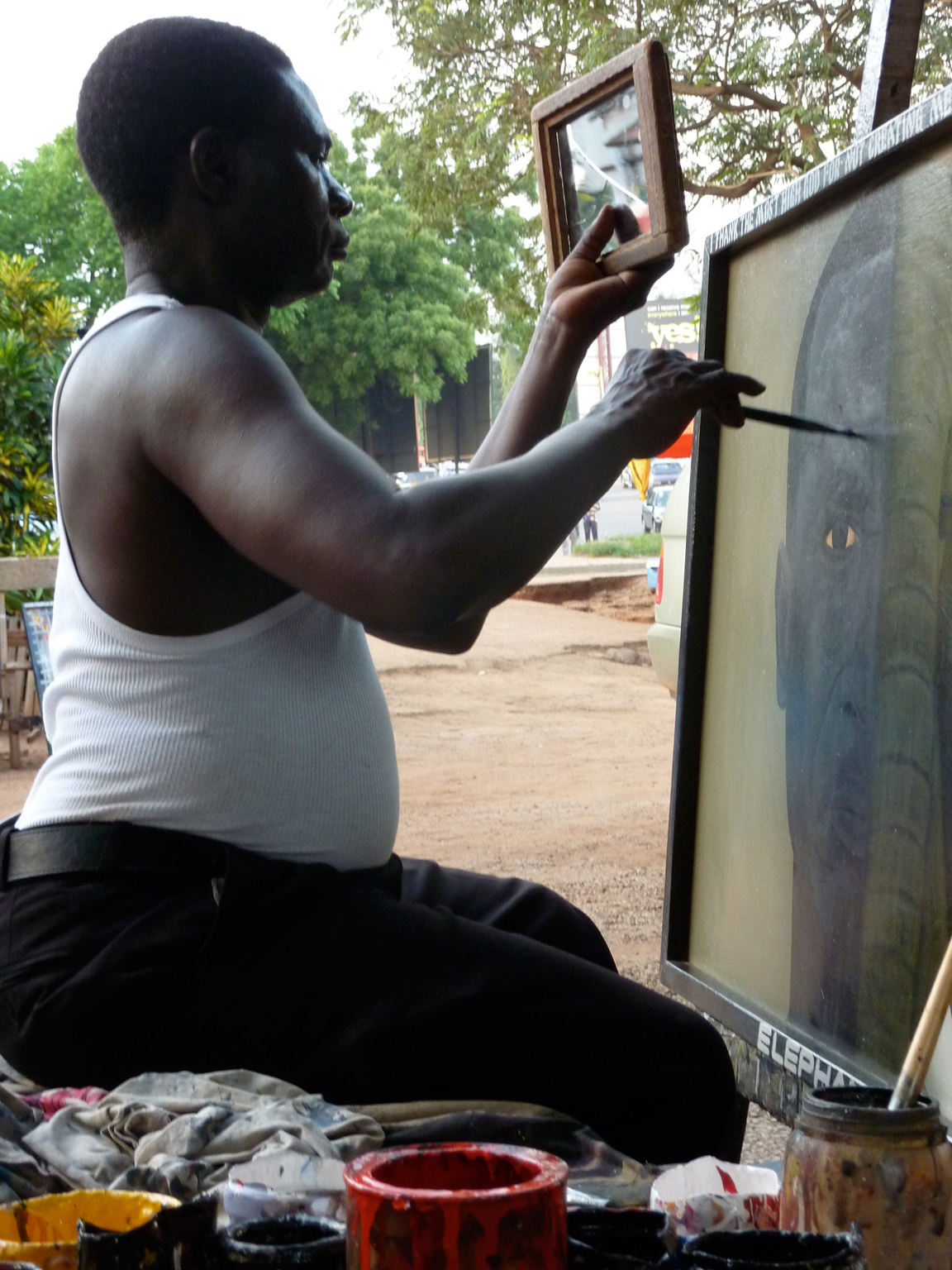
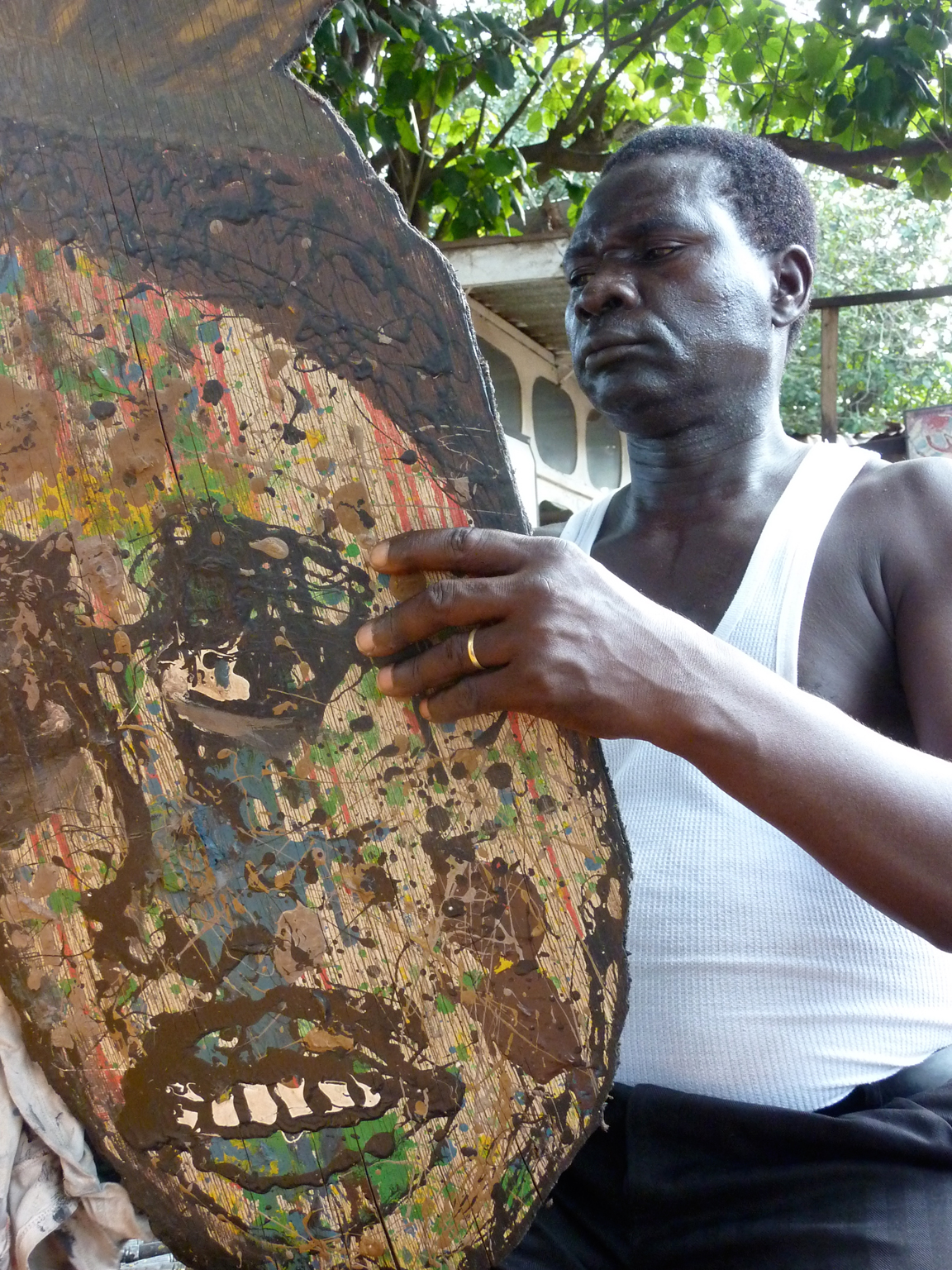
KWAME AKOTO “ALMIGHTY GOD ART WORKS”, KUMASI, GHANA
BIOGRAPHY
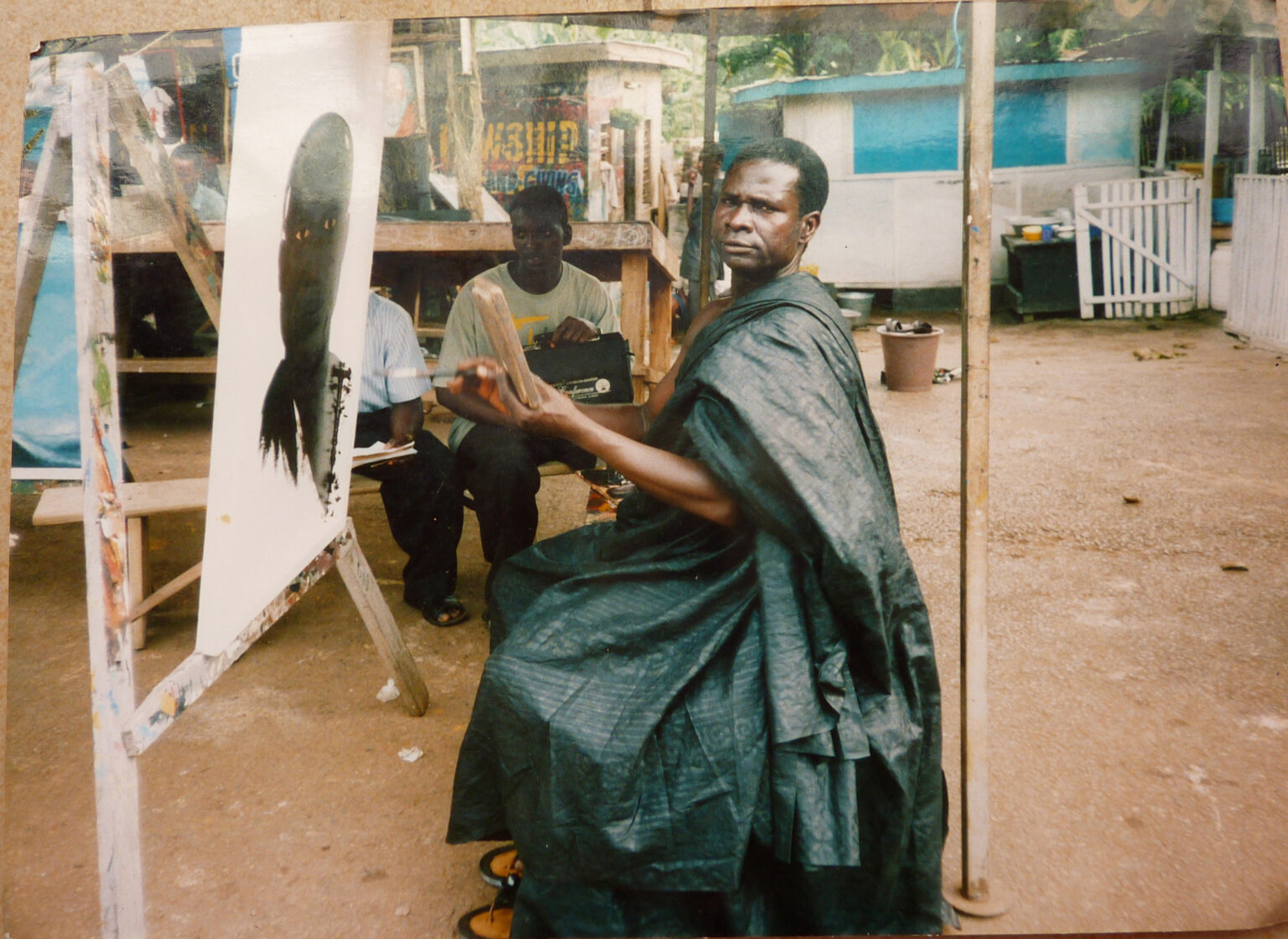
Kwame Akoto began his artistic career as an apprentice for six years under two sign painters. This tradition, dating from colonization and the spread of industrial paints, is established throughout Africa to identify and advertise businesses and other activities, particularly open-air garages in the neighborhood where Kwame Akoto would establish himself, also decorating vehicles.
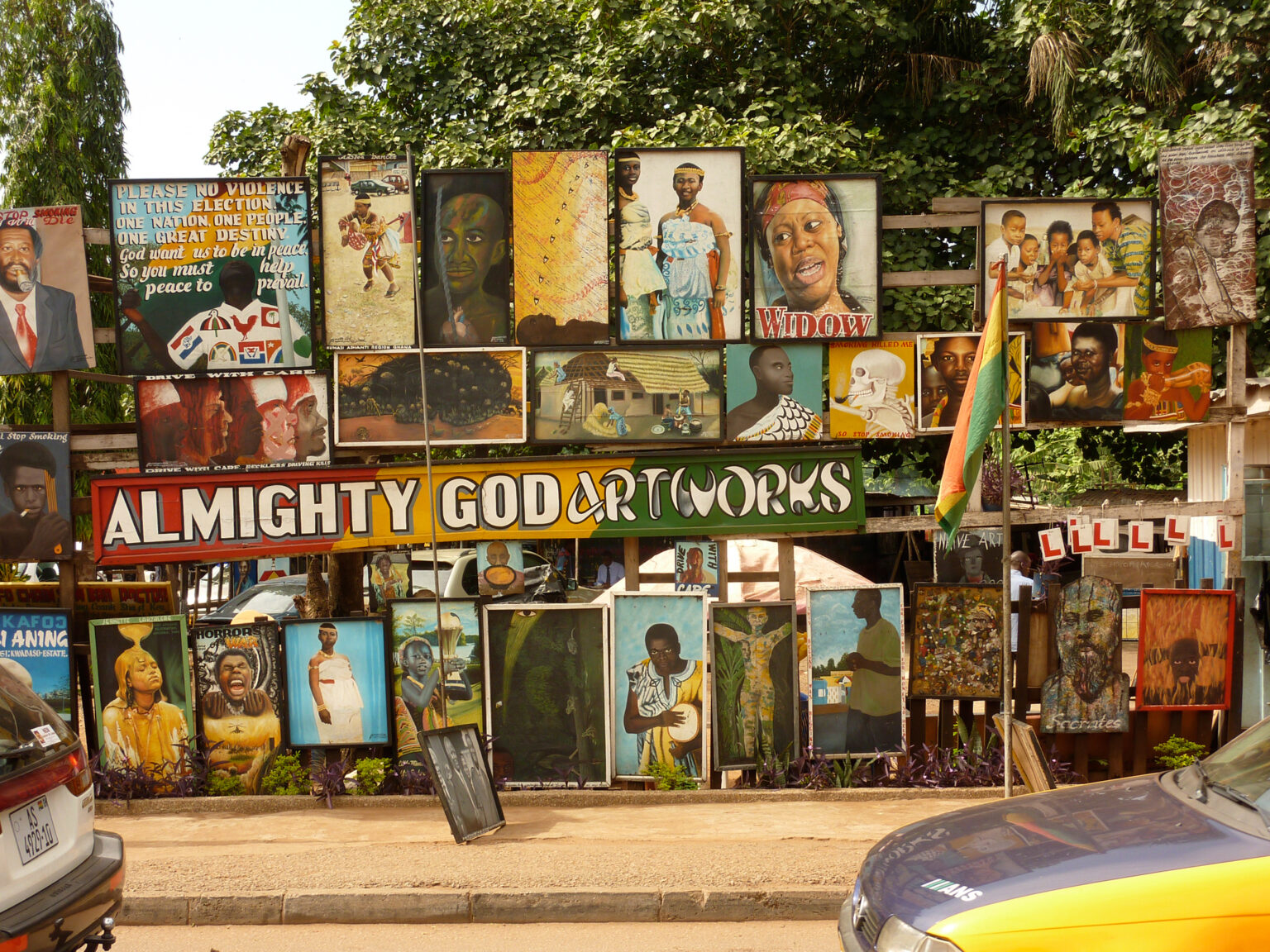
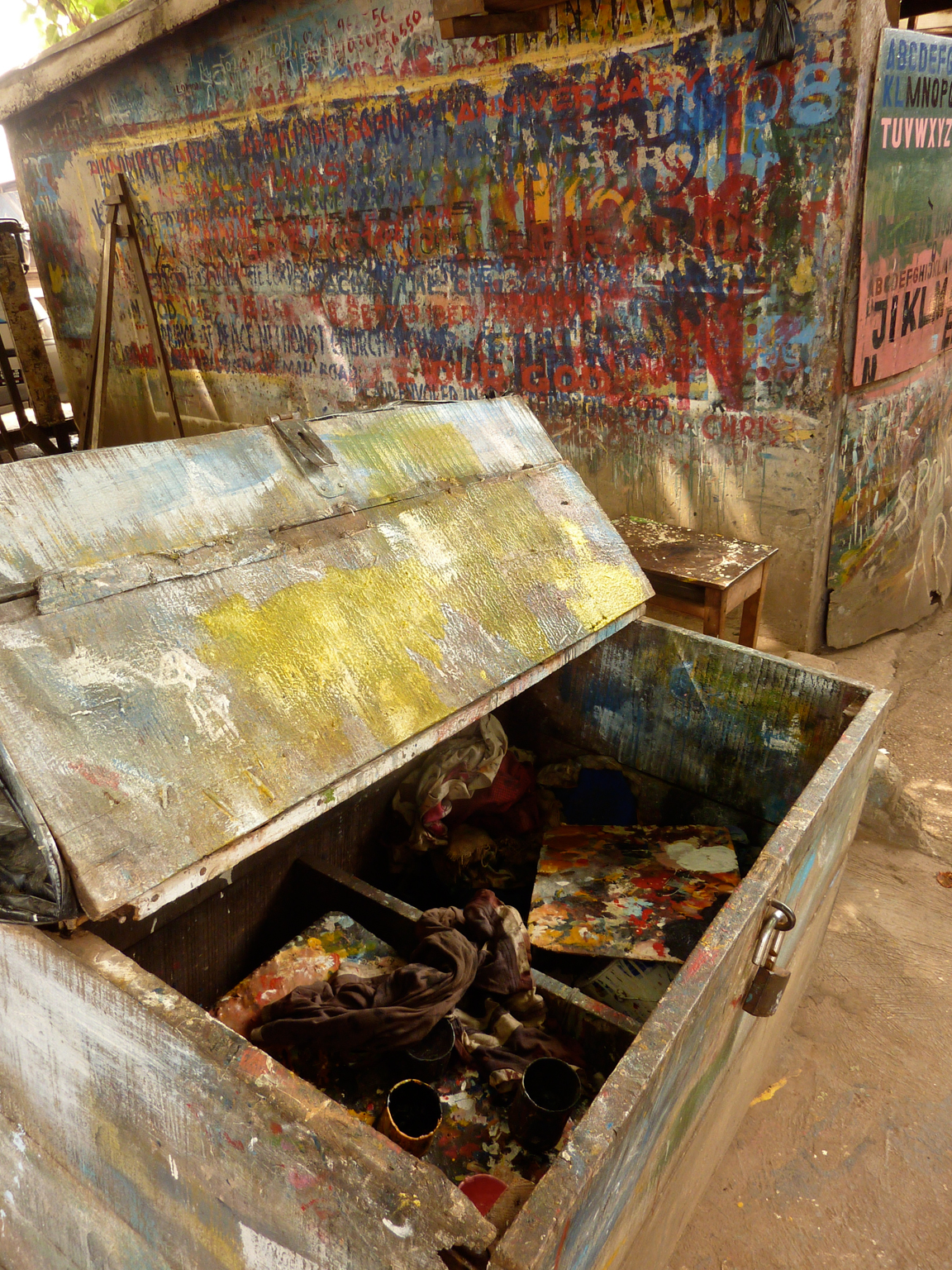
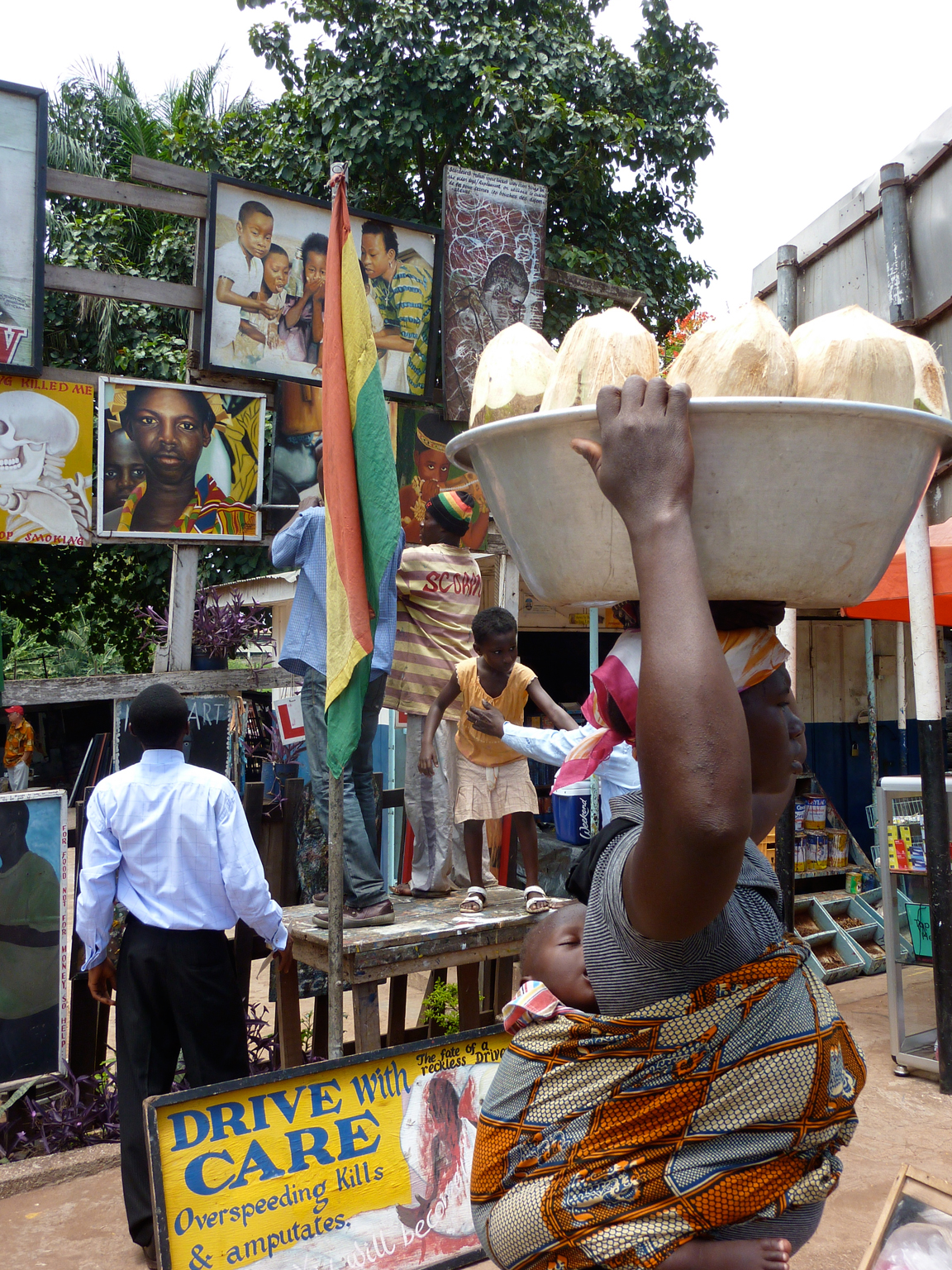
In 1972, he opened his own workshop “Anthony Art Works,” which he renamed in 1977 “Almighty God Art Works,” at Suame Junction, a vast intersection with heavy traffic. Along the road, he uses a large fence to display his works, catching the eye of passersby and motorists. Behind the fence extends a small hamlet housing the workshops where a dozen students work, several generations of whom he has trained, as well as the canteen of the small community where his wife Faustina presides.
In 1991, he joined the Pentecostal church and became a respected preacher. He abandoned commercial commissions, radiating his faith through his painting, interspersed with spiritual precepts, often not without humor, carefully calligraphed on the frame, exhorting viewers not to stray from the righteous path.
The sovereigns and customs of the Ashanti kingdom, of which Kumasi is the historic capital, with its vibrant traditions, are also amply represented in his work.
His art is deeply personal, identifiable at first glance, blending tradition and living art. Often working from photographs taken from newspapers and using brightly colored industrial paints, his subjects and effective technique speak to everyone.
The styles of his painting, always figurative, differ according to periods and sometimes coexist, ranging from naive painting to realism and even hyperrealism.
In 1992, the artist Hervé Di Rosa, captivated by “Arts Modestes” for which he opened a museum in Sète in 2000, undertook a world tour of these unclassifiable artists outside the art market, and discovered Kwame Akoto, with whom he stayed and worked on three occasions in 1993 and 1994, thus contributing to making his work known outside Ghana.
La Maison Rouge – Fondation Antoine de Galbert occasionally presented some of these works during its period of activity (2004-2018) and the Musée du Quai Branly – Jacques Chirac is dedicating an exhibition to him from March 31 to September 6, 2026, sponsored by the Fondation Antoine de Galbert, to whom we owe the publication of the catalogue.
The following works were acquired in 2005 and 2010 directly from the artist and all executed by his hand, favoring the oldest ones, his most creative period spanning from the early 1990s to the late 2000s.
©photos Eric Touchaleaume 2010
Available