
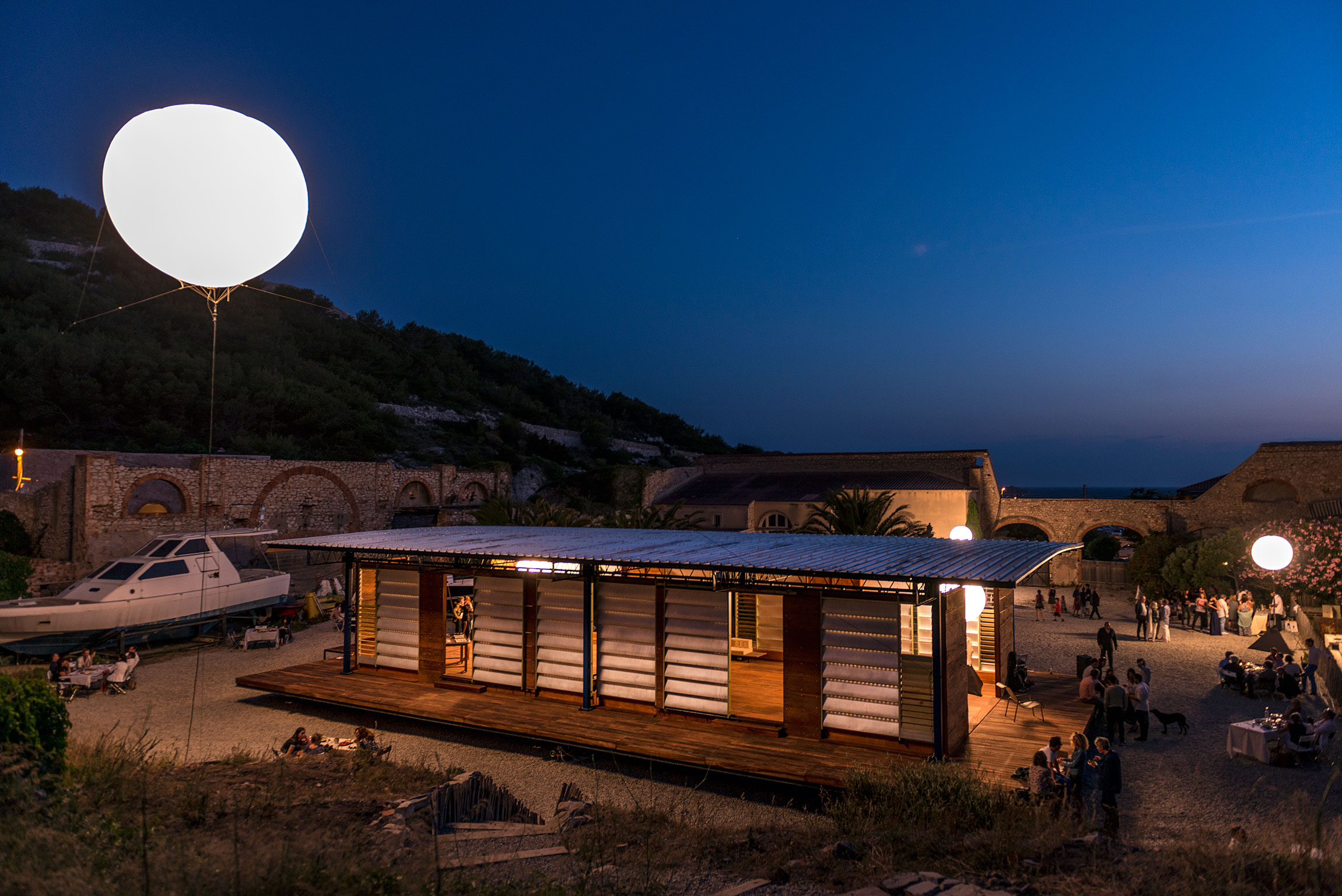
Jean Prouvé & LWD Architectural Studio
(Lagneau, Weill & Dimitrijevic).
Tropical Habitat Prototype, 1958
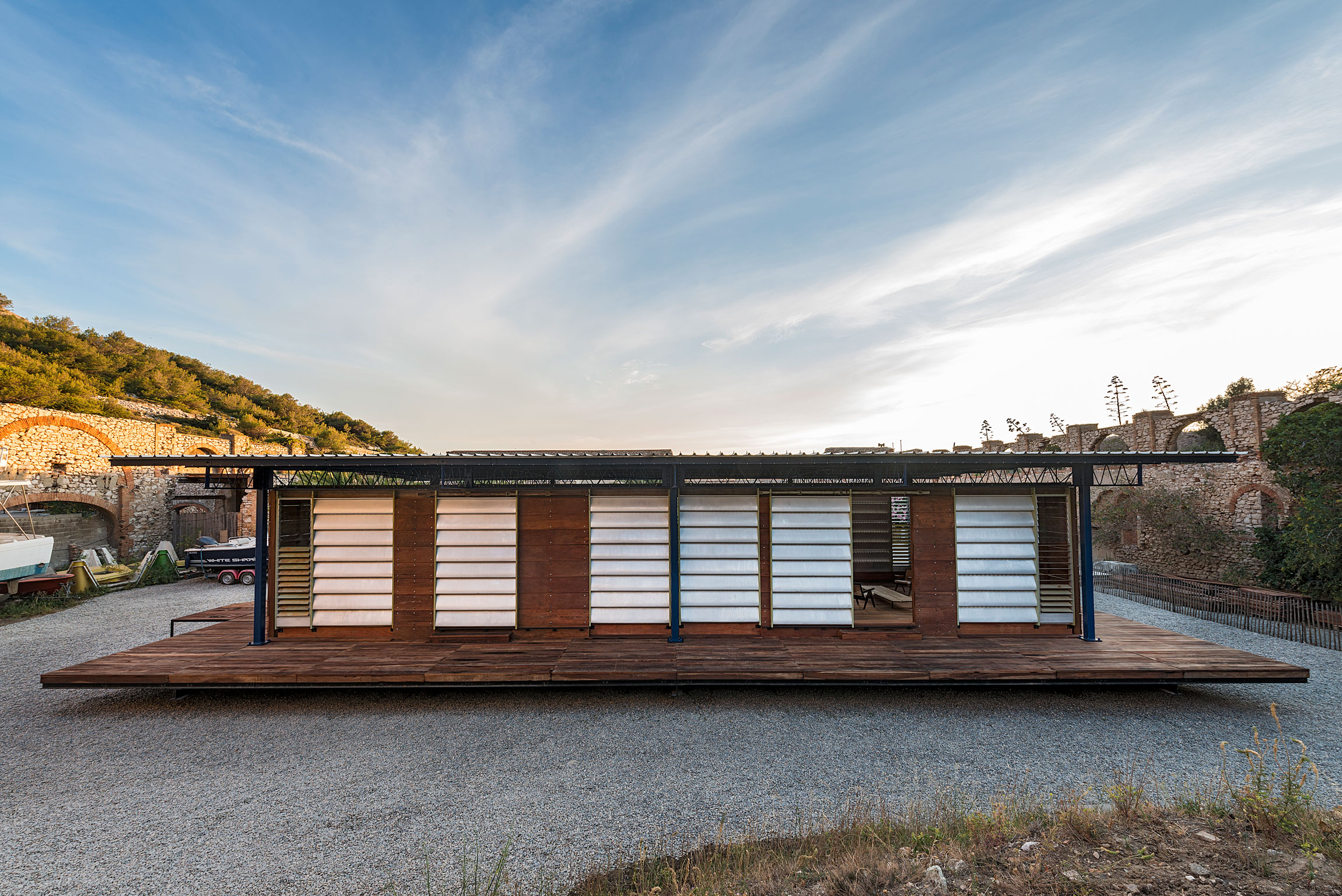
H. 5 m x L 22.15 m x D. 12.80 m
Adaptations
In order to adapt this structure to the successive assembly and disassembly required for new uses, a number of transformations were necessary.
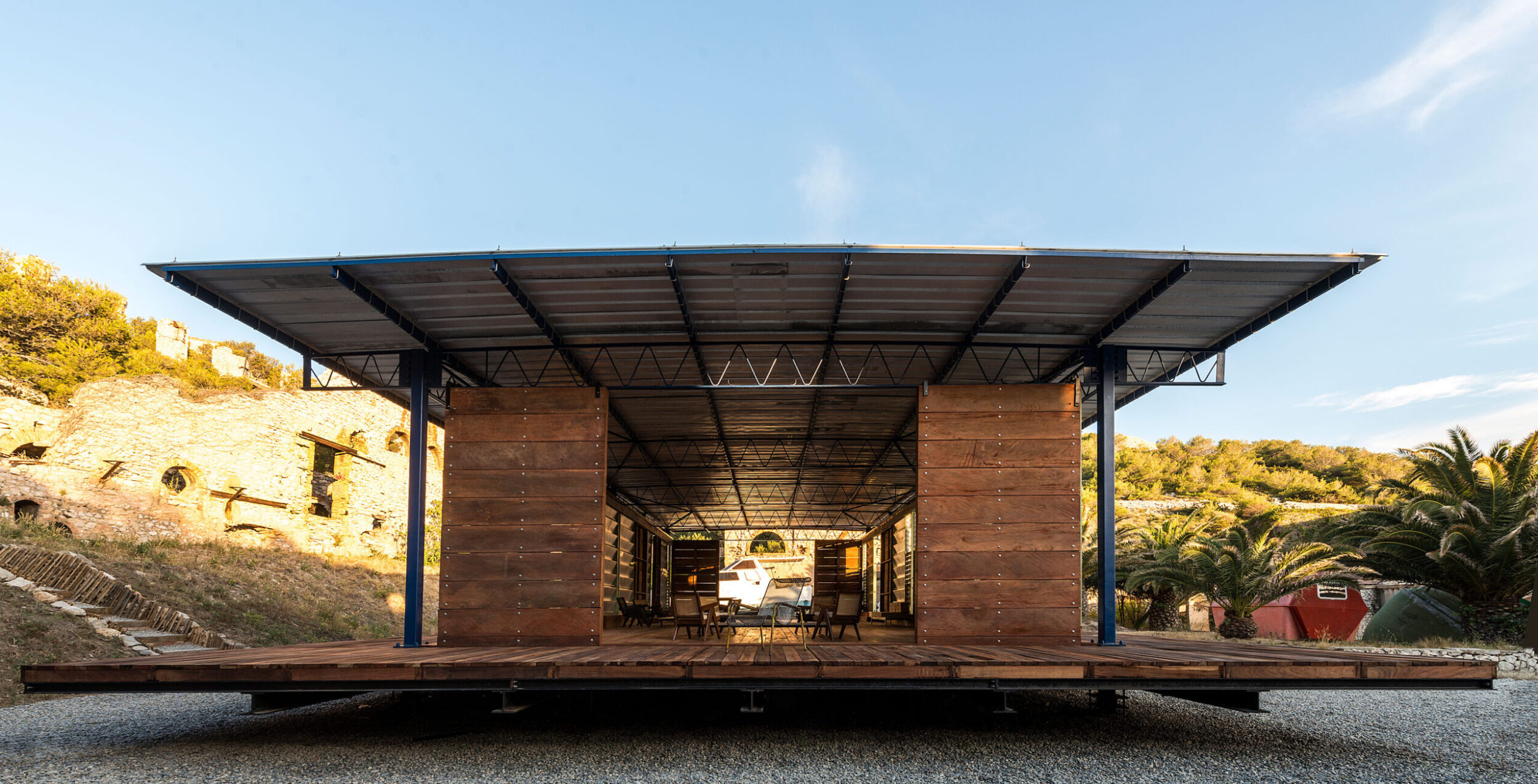
In situ, the six load-bearing posts were bolted onto concrete blocks arranged around the concrete slab defining the interior surface of the dwelling.
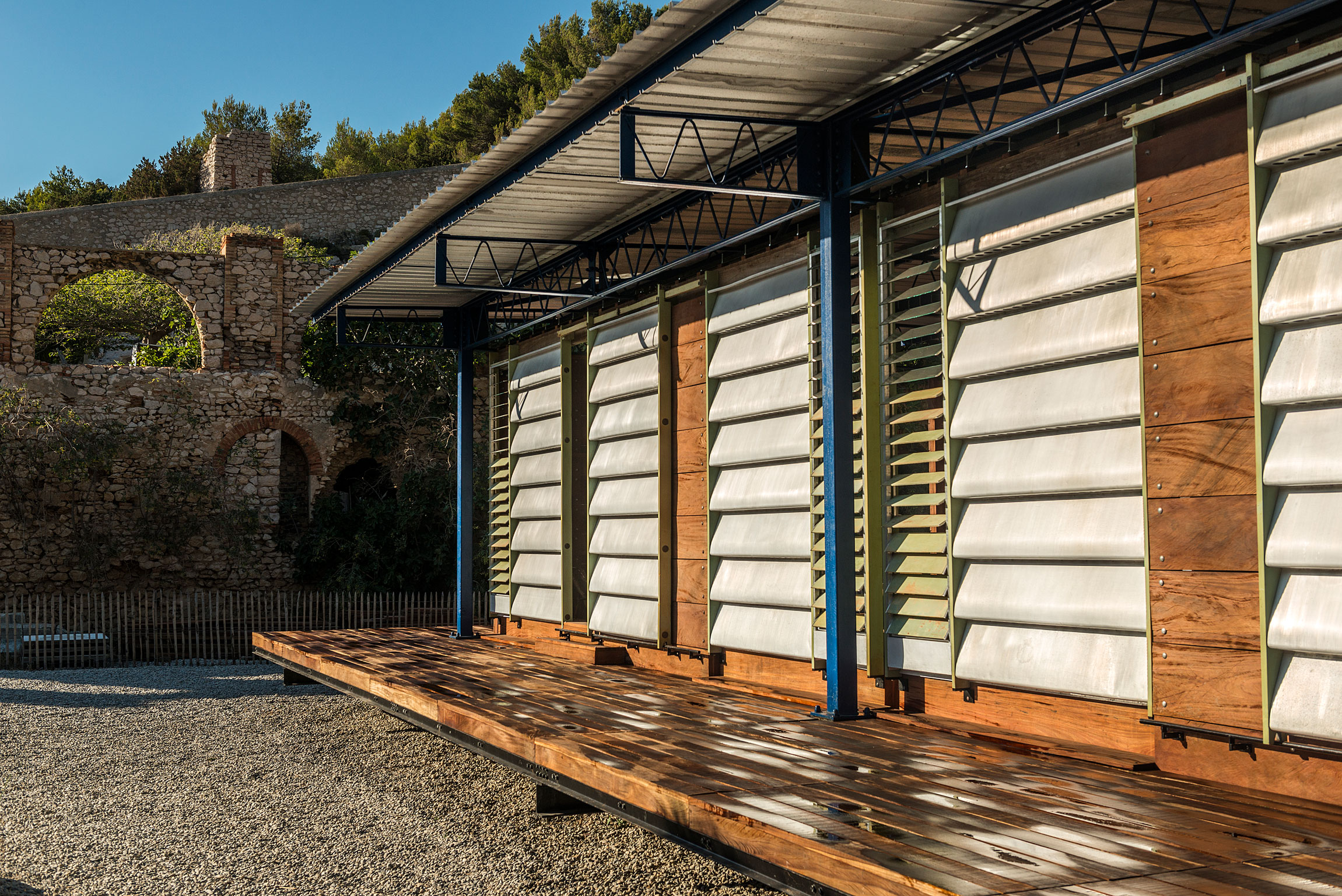
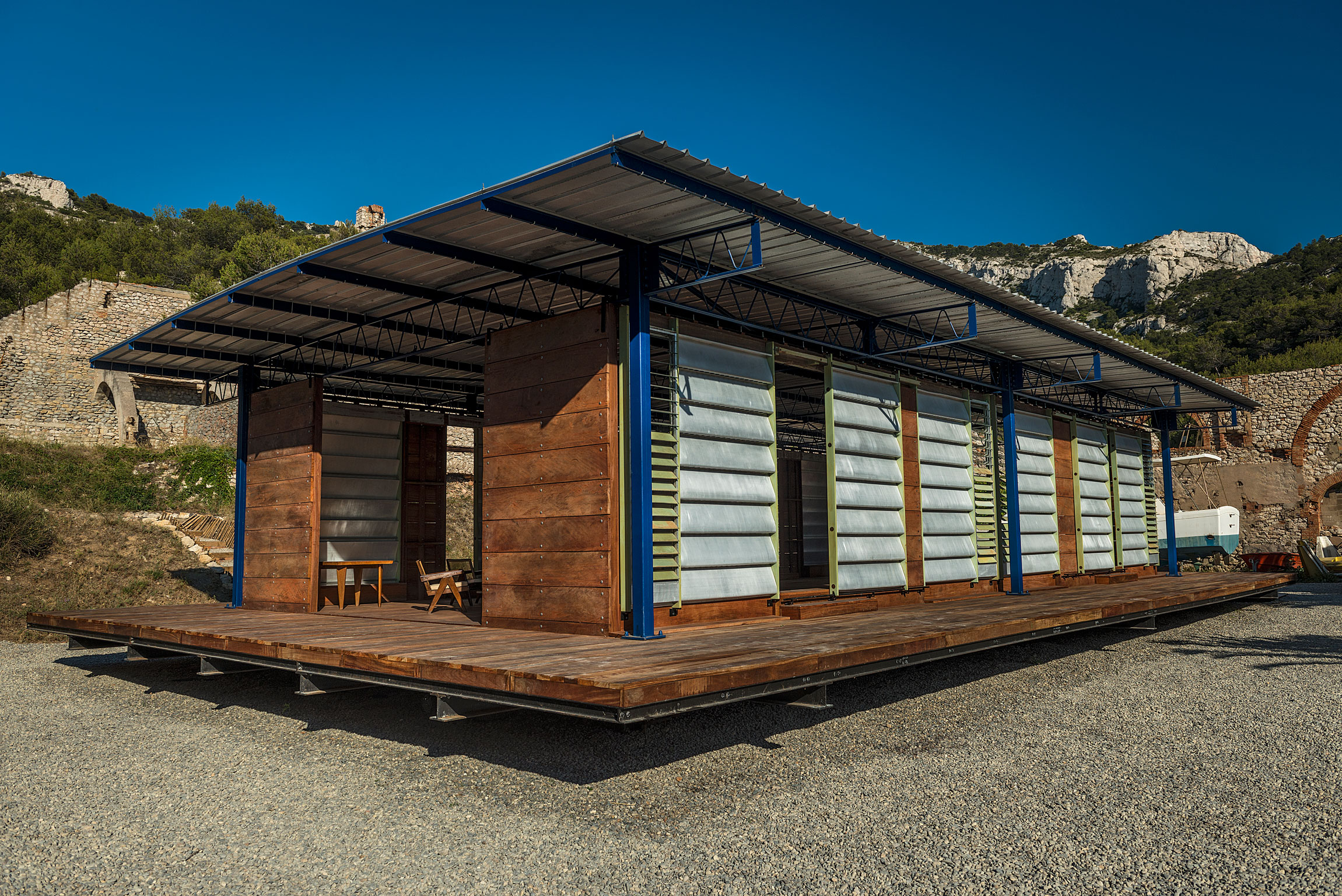
These concrete foundations were replaced by a demountable steel structure made of HEB beams resting on metal pads, simply placed on the ground and bolted to the structure. The entire assembly is covered with tropical wood flooring.
This building is therefore without foundations but perfectly stable and capable of resisting the most violent weather and natural phenomena thanks to the rigidity and high weight of its metal base.
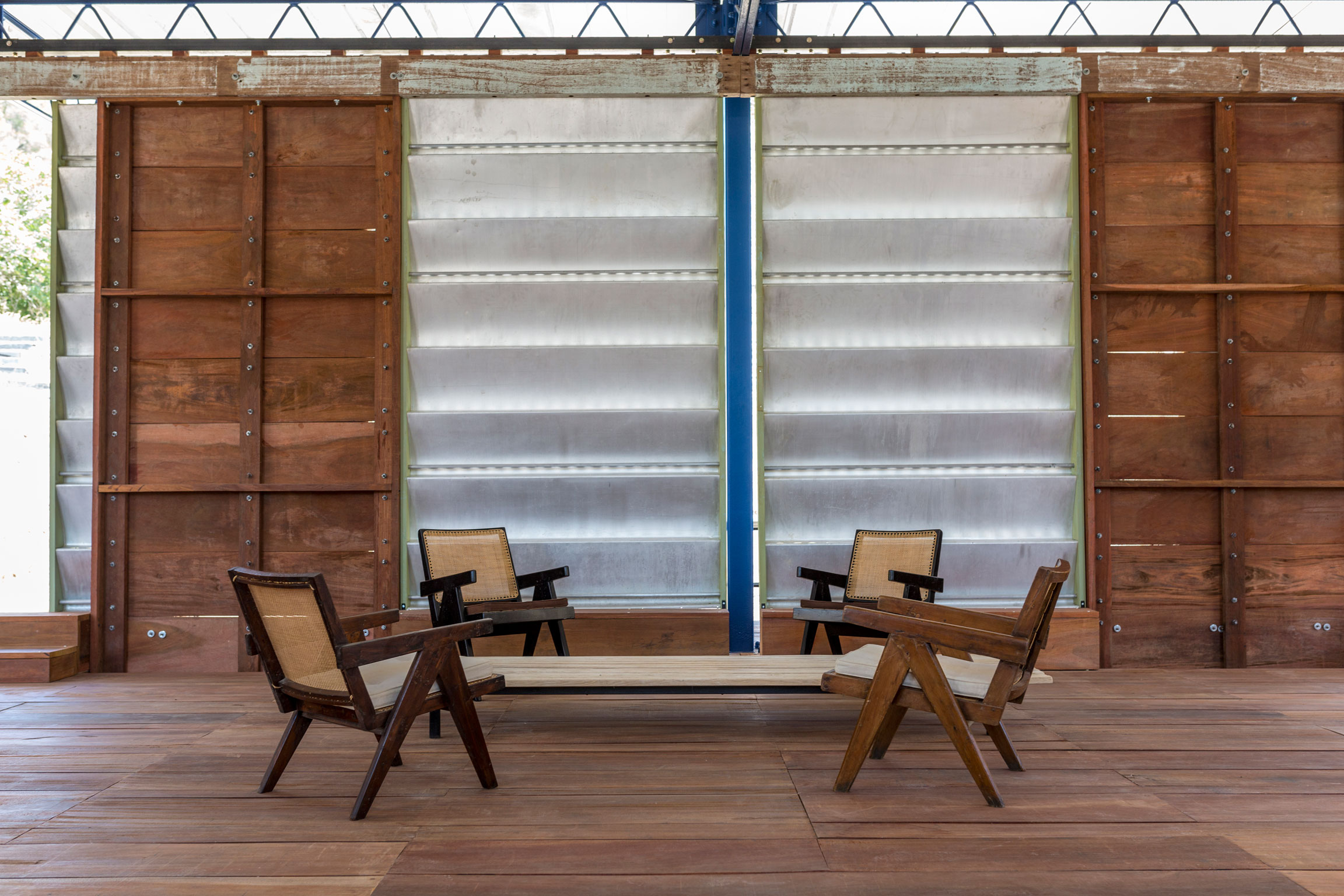
The platform, extending significantly beyond the living area, is covered with parquet flooring indoors and tropical wood decking on the veranda encircling the house.
An adjustable-height ramp, also made of HEB and wooden decking, provides access to the terrace.
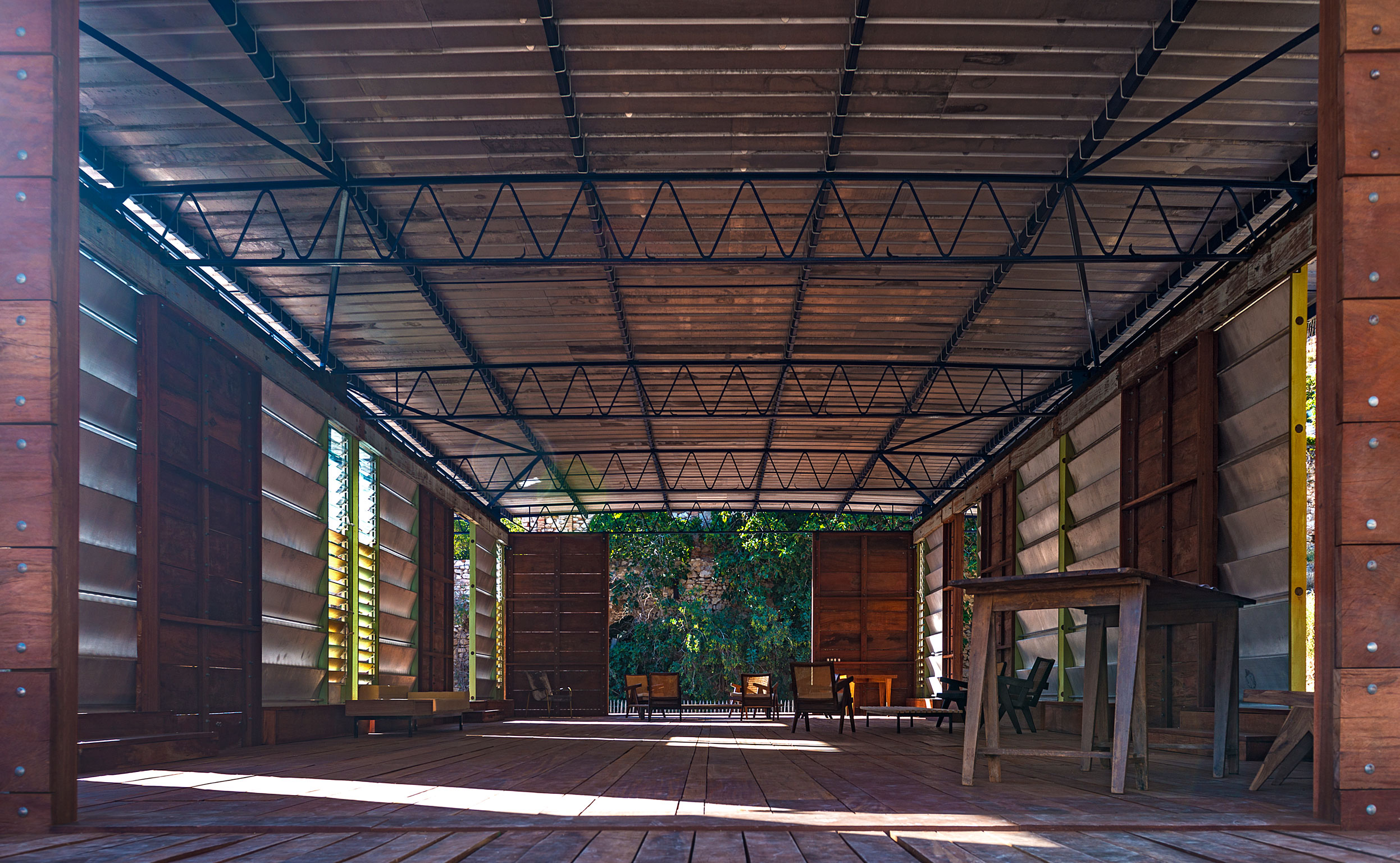
Each of the two gable walls, originally without openings, features two fixed side panels and a double sliding door mounted on a track, the whole covered with cladding of wide tropical wood planks.
All wooden parts are made of Okan, a species particularly resistant to humidity, wood-boring insects, and fire.
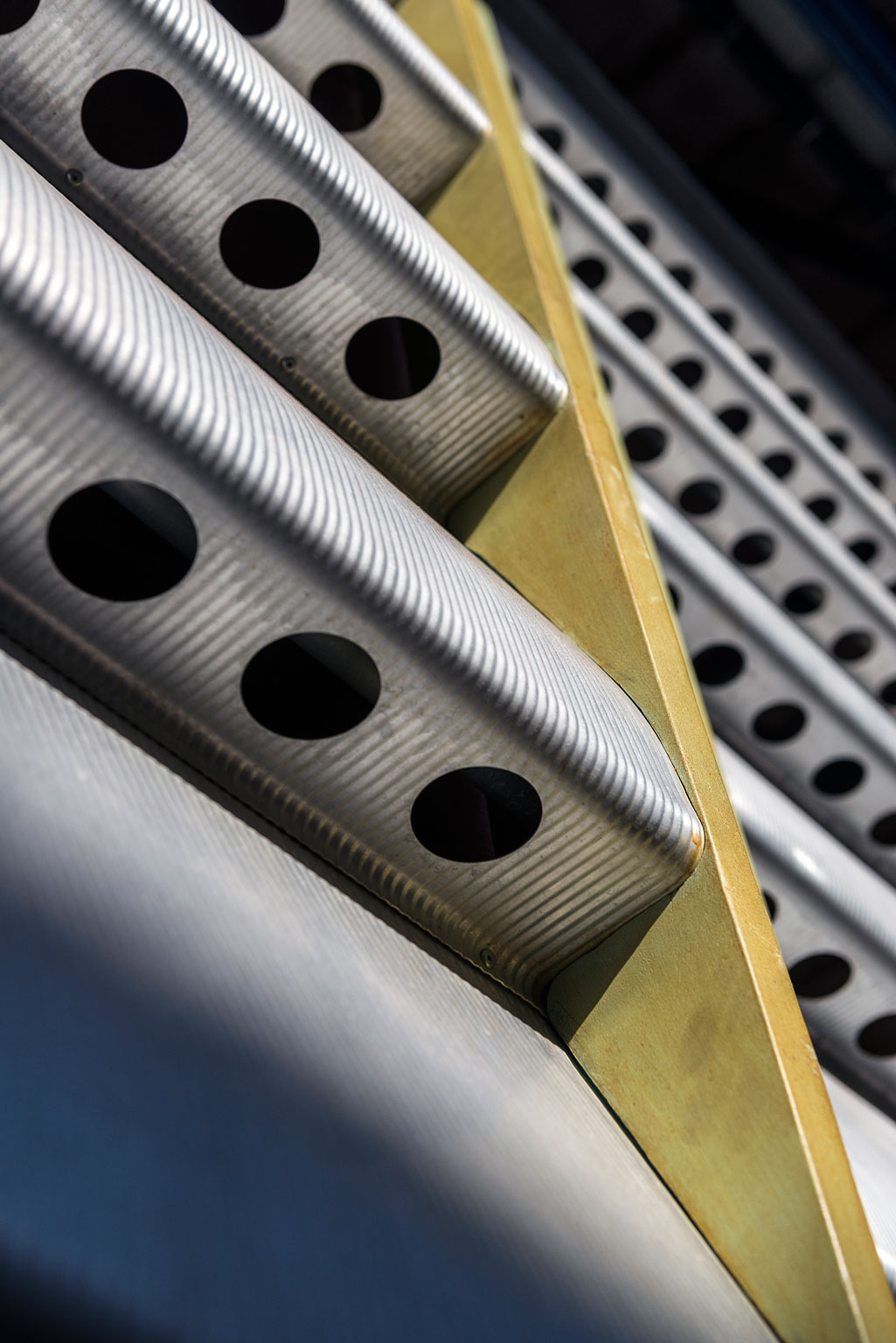
The interior false ceiling made of corrugated aluminum sheet, known as “Ondulite“, originally fitted to the structure, has not been reinstalled, in order to provide a more spacious interior height.
The loss of natural ventilation has been compensated by the installation of two layers of roofing trays, between which effective insulation was installed.
This modification is not apparent to the layman.
Restorations
This structure is in exceptional condition, comprising all its original elements.
The framework has been repainted in navy blue according to the original model.
The six load-bearing posts have been reinforced with an internal sleeve and repainted in navy blue according to the original model.
The two gable walls, originally made of concrete blocks on this example, have been rebuilt to the model observed in Cameroon on a variant with wooden gable walls that were too damaged to be salvaged.
Additional modifications available upon request
At the buyer’s request, it would be possible to reinstall the “Ondulite” false ceiling, ensuring better insulation for the living unit.
Using the structure in a temperate climate would require additional modifications, such as lining the walls with solid or glazed sliding panels.
Available