José Maria SERT (1874-1945) attributed to
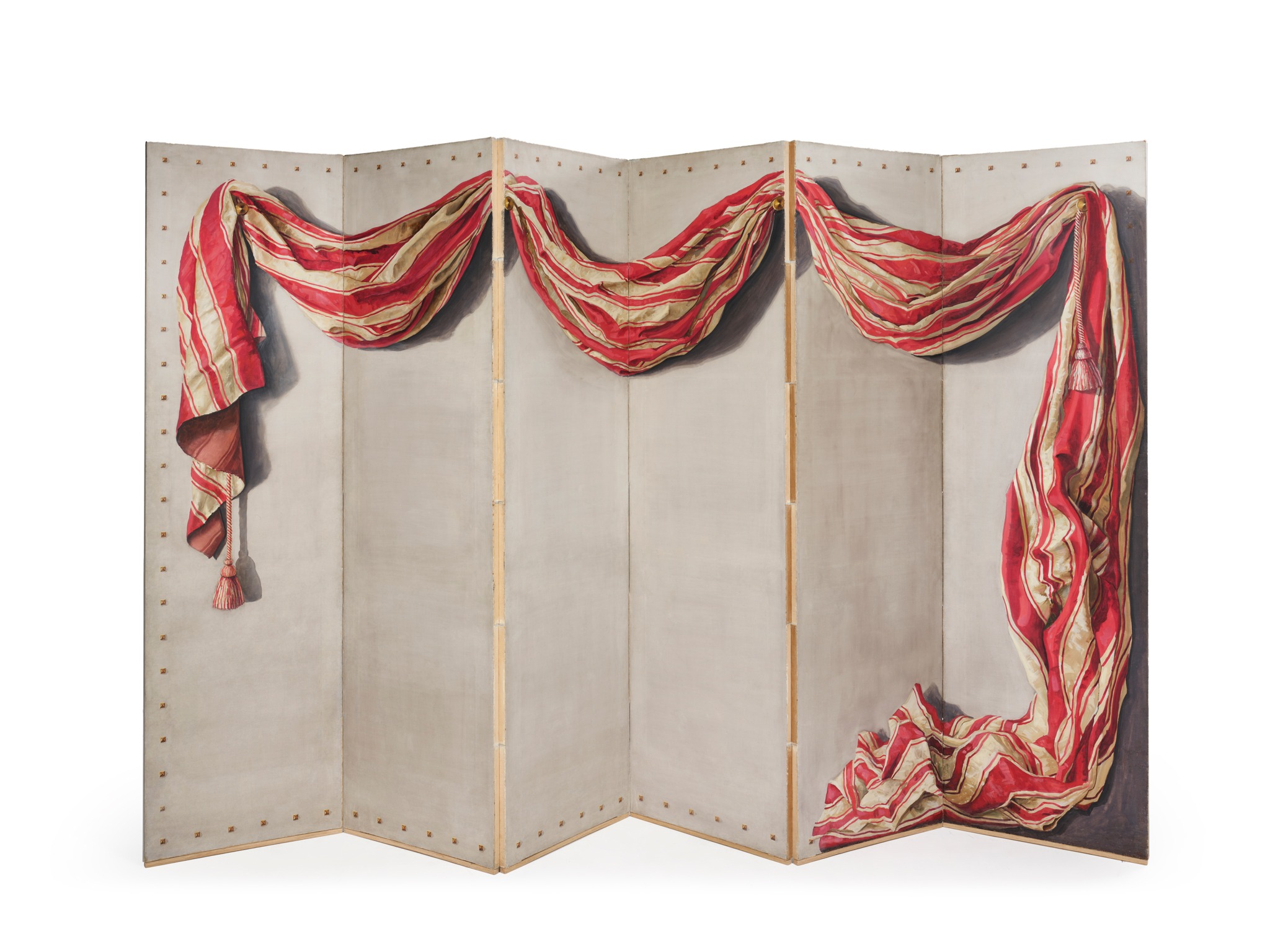
Drapery screen, circa 1920/30
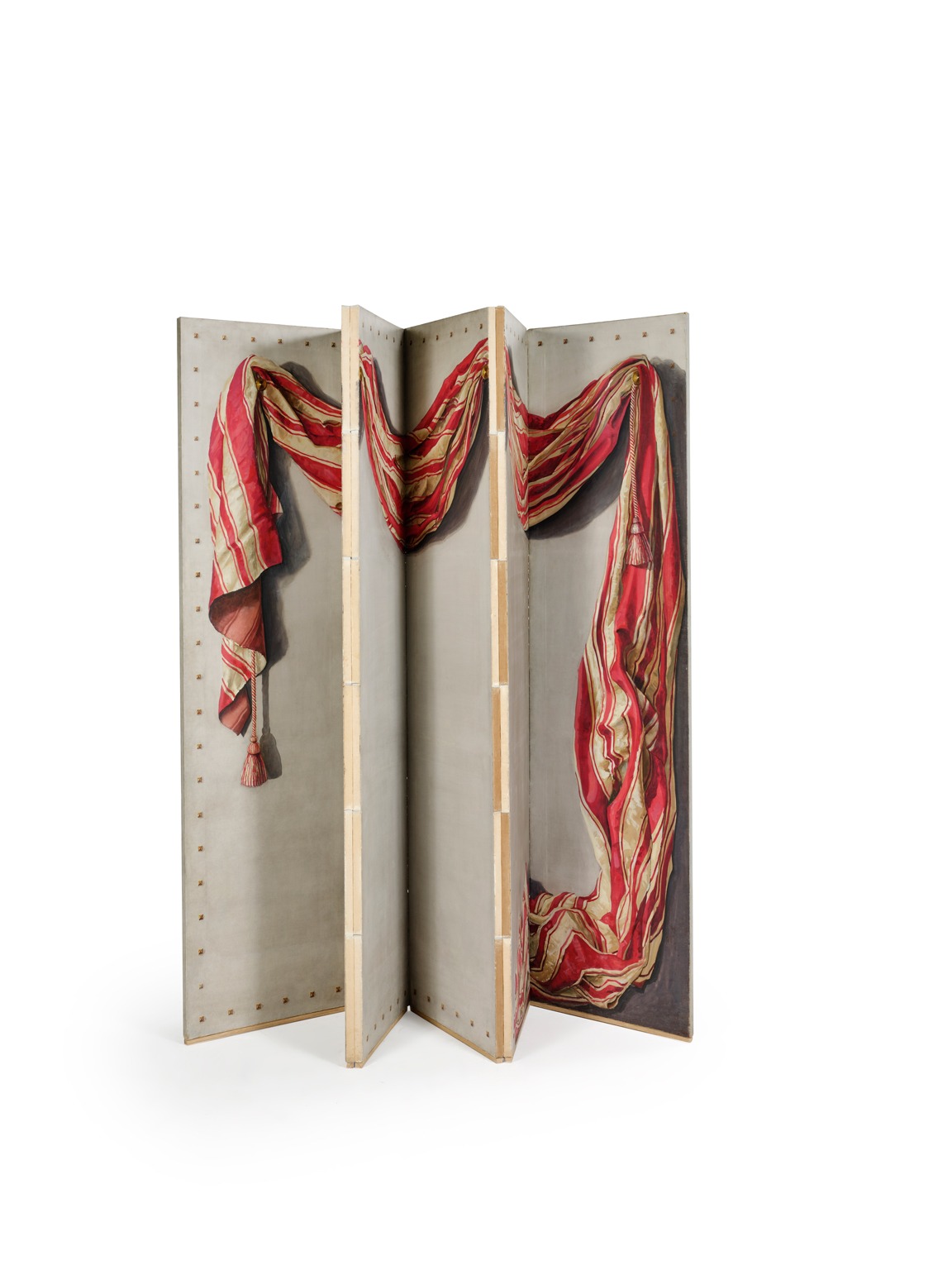
Six-panel screen painted on canvas mounted on a wooden frame, with canvas hinges.
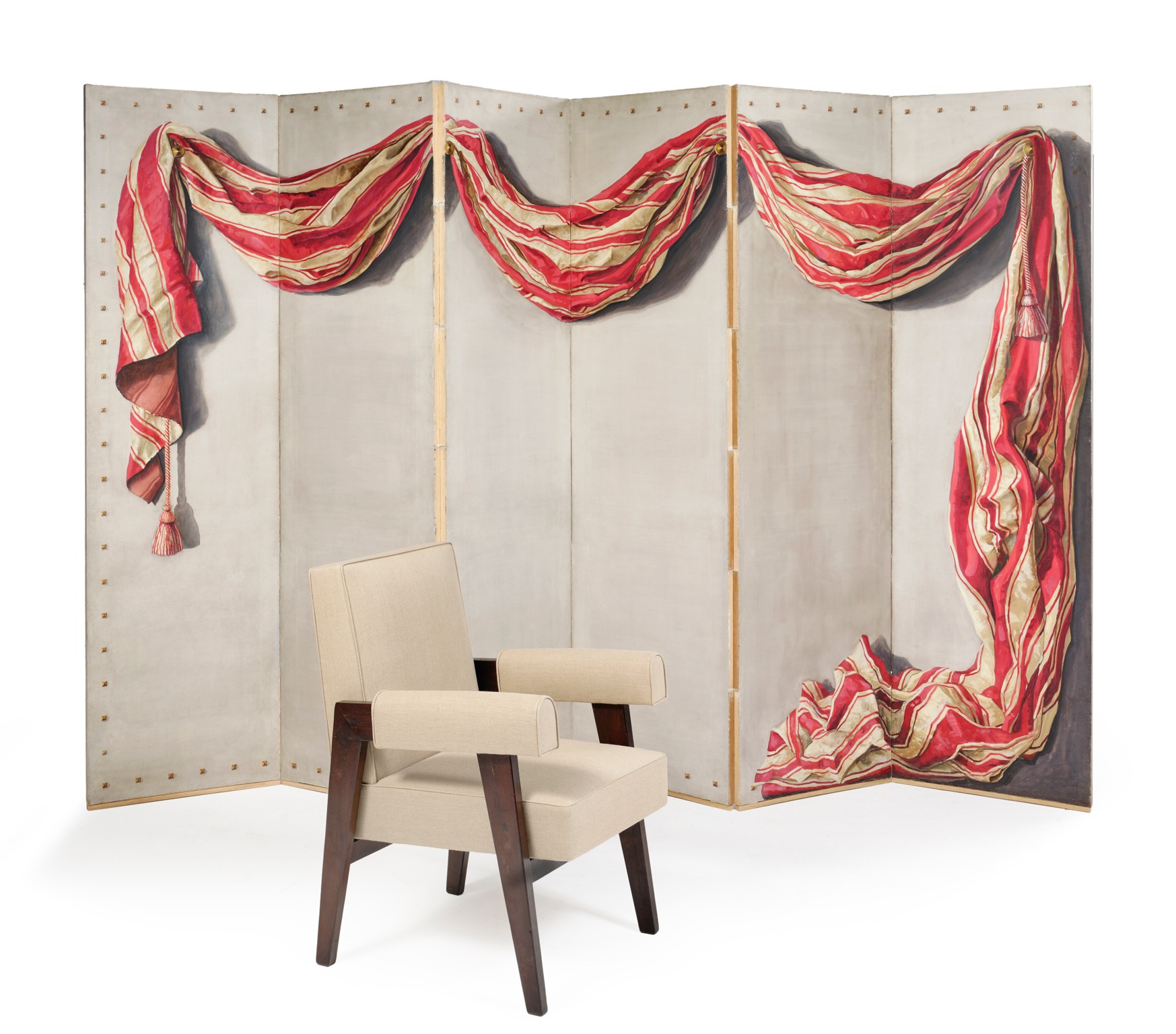
Height 212 cm, panel width 60 cm, total width 360 cm.
Oak strip plinth added during restoration.
No signature, no mark.
The blood-red theatrical drapery, sometimes striped with white, is omnipresent in the work of the brilliant neo-Baroque painter-decorator José Maria Sert, creator of numerous wall decorations and screens.
This “boudoir” or artist’s studio screen, painted in trompe l’oeil with great dexterity, is possibly a work from Sert’s studio, with which it shares many similarities, both in terms of theme, spontaneous treatment, color choice, and medium. It could also be the work of an inspired follower, justifying the cautious term “attributed” to Sert, but in any case, its creation dates from the 1920s/30s.
The sole motif depicted is this heavy drapery with tormented folds, held to the wall by four gilded bronze hooks, secured by a tasseled cord at both ends, to finally lie languidly coiled on the floor on the right side.
The composition is treated in double trompe l’oeil: on the one hand, the central subject of the drapery and its cast shadows stand out against a patinated gray wall, and, on the other hand, the whole depicts a canvas fixed to the wall at its edges by square gilded copper upholstery tacks.
The plain gray back with a simple decoration of stylized rosettes is typical of the 1925 Art Décoratif style.