Francisco Iturrino
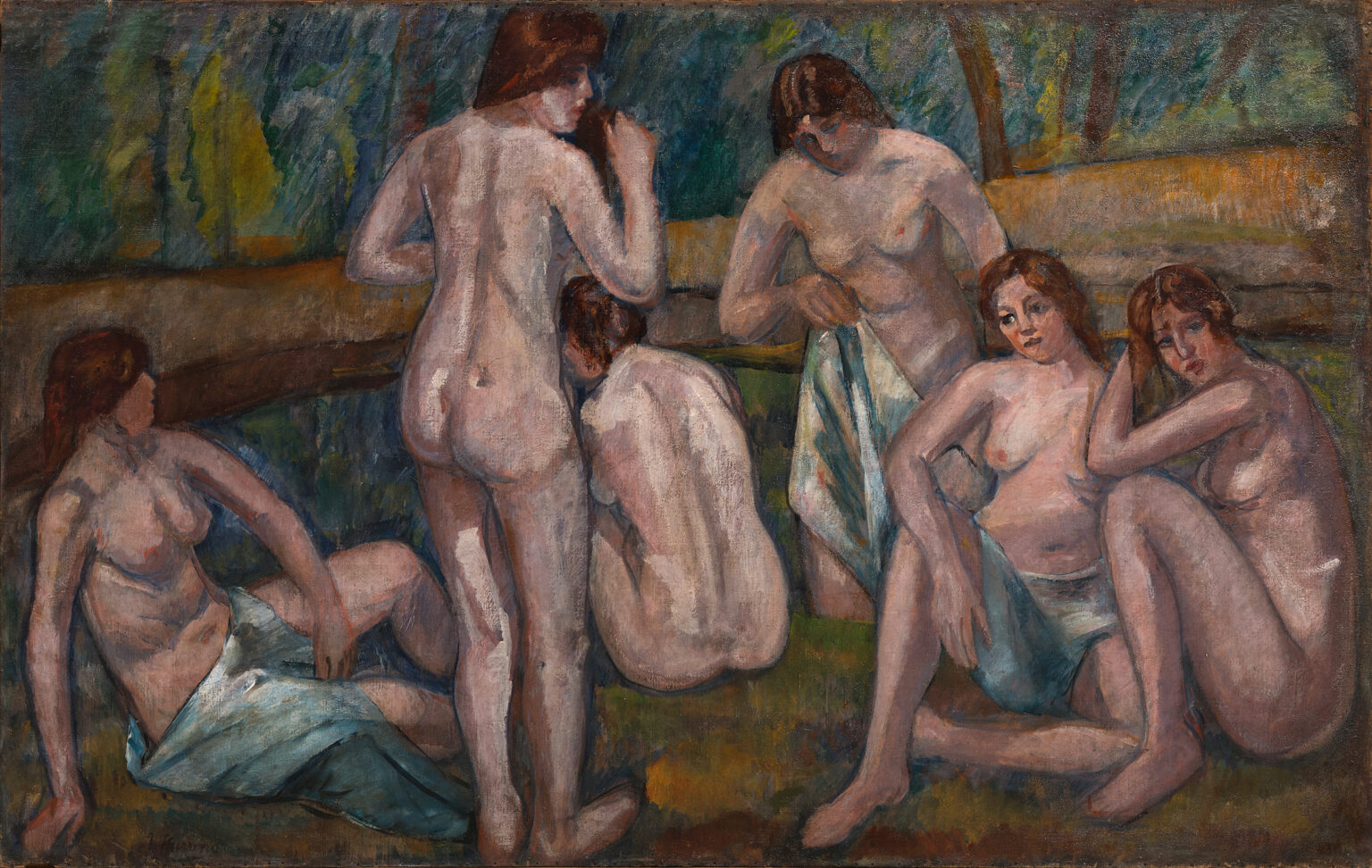
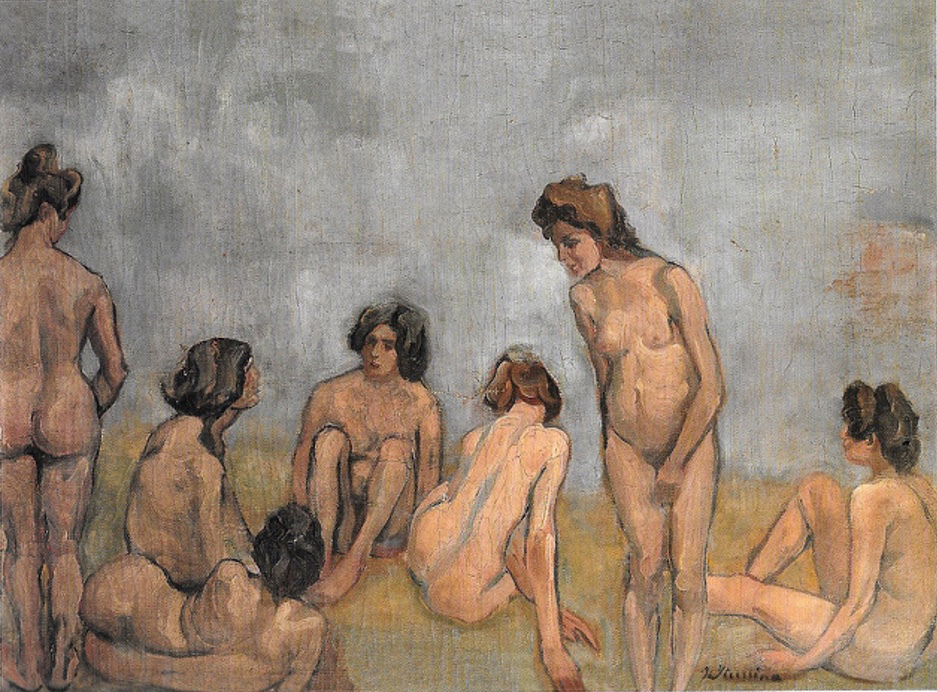
Bathers, c. 1906
Oil on canvas, 121 x 191 cm.
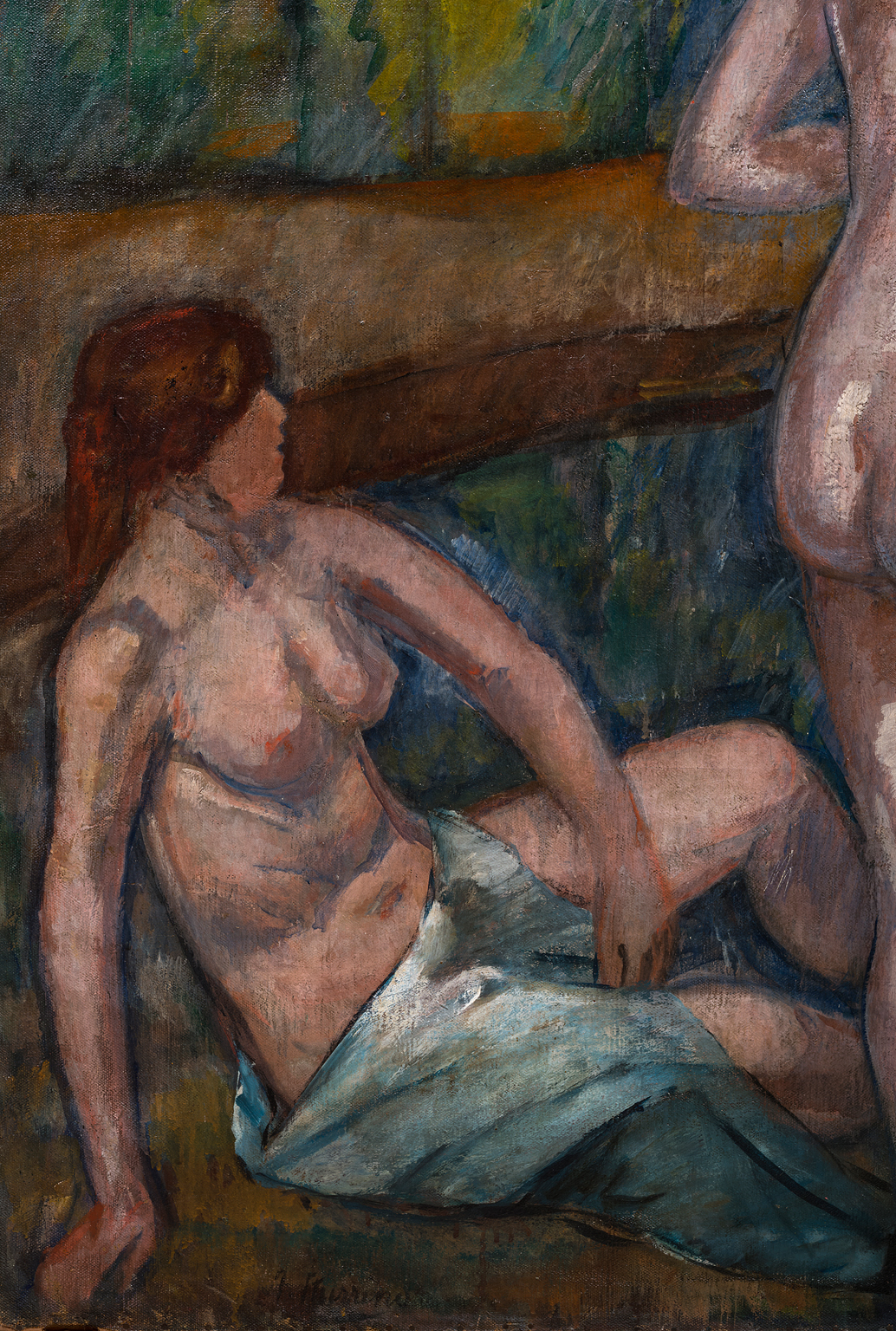
Signed “F. Iturrino” lower left.
Francisco Iturrino studied at the Royal Academy of Fine Arts in Brussels with the painter Henri Evenepoel and met the critic and collector Octave Maus.
He exhibited in Paris for the first time in May 1901 at the Salon des Indépendants, thanks to the support of the critic Gustave Coquiot.
He then met Pablo Picasso, with whom he became friends, and moved within the circle of the dealer Ambroise Vollard, who exhibited them together in June–July 1901.
Vollard exhibited him again in May 1902, and through 1904.
He subsequently returned to Spain and set up his studio in Seville.
In 1910–1911, he travelled to Morocco in the company of Henri Matisse.
In October, he exhibited a significant number of his works at the Salon d’Automne.
In 1919, a major solo exhibition was organised at the Círculo de Bellas Artes in Madrid.
In 1920, the critic Élie Faure organised an exhibition of his work at the Galerie Rosenberg (Paris).
There are four famous portraits depicting the painter Iturrino, whose features were particularly expressive:
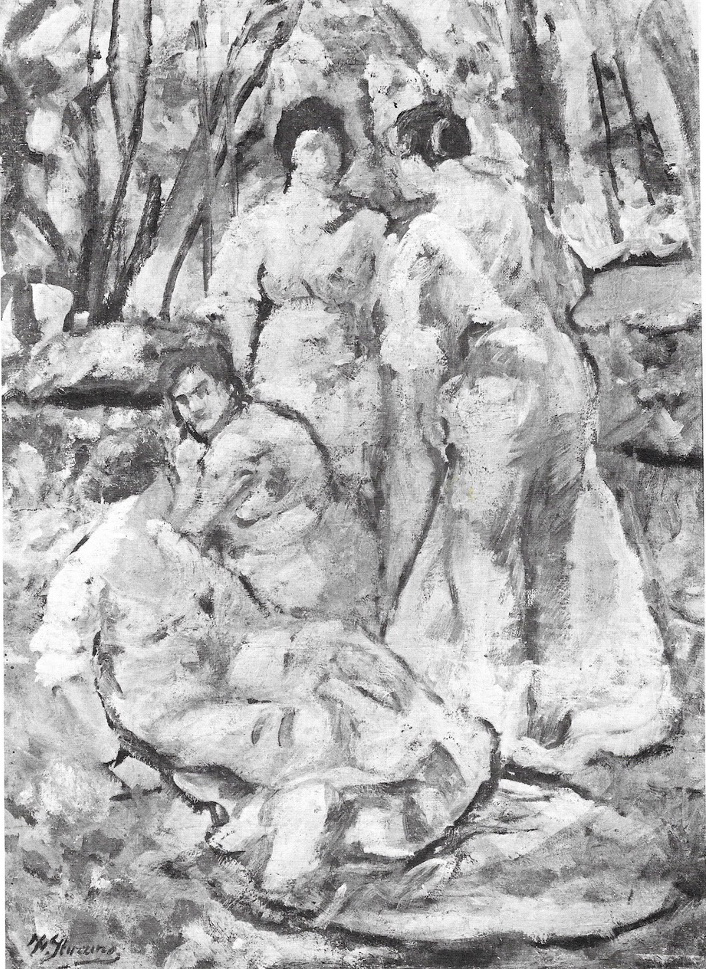
Like his close predecessors and contemporaries among the greatest—Cézanne, Gauguin, Manet, Renoir, Matisse, Picasso, Derain…—Iturrino devoted himself throughout his career to the theme of bathers. Among the most remarkable works related to the present painting are Banistas, 1895–1898, of astonishing radical modernity (see opposite), and Las cuatros del regalo, 1906 (see opposite).
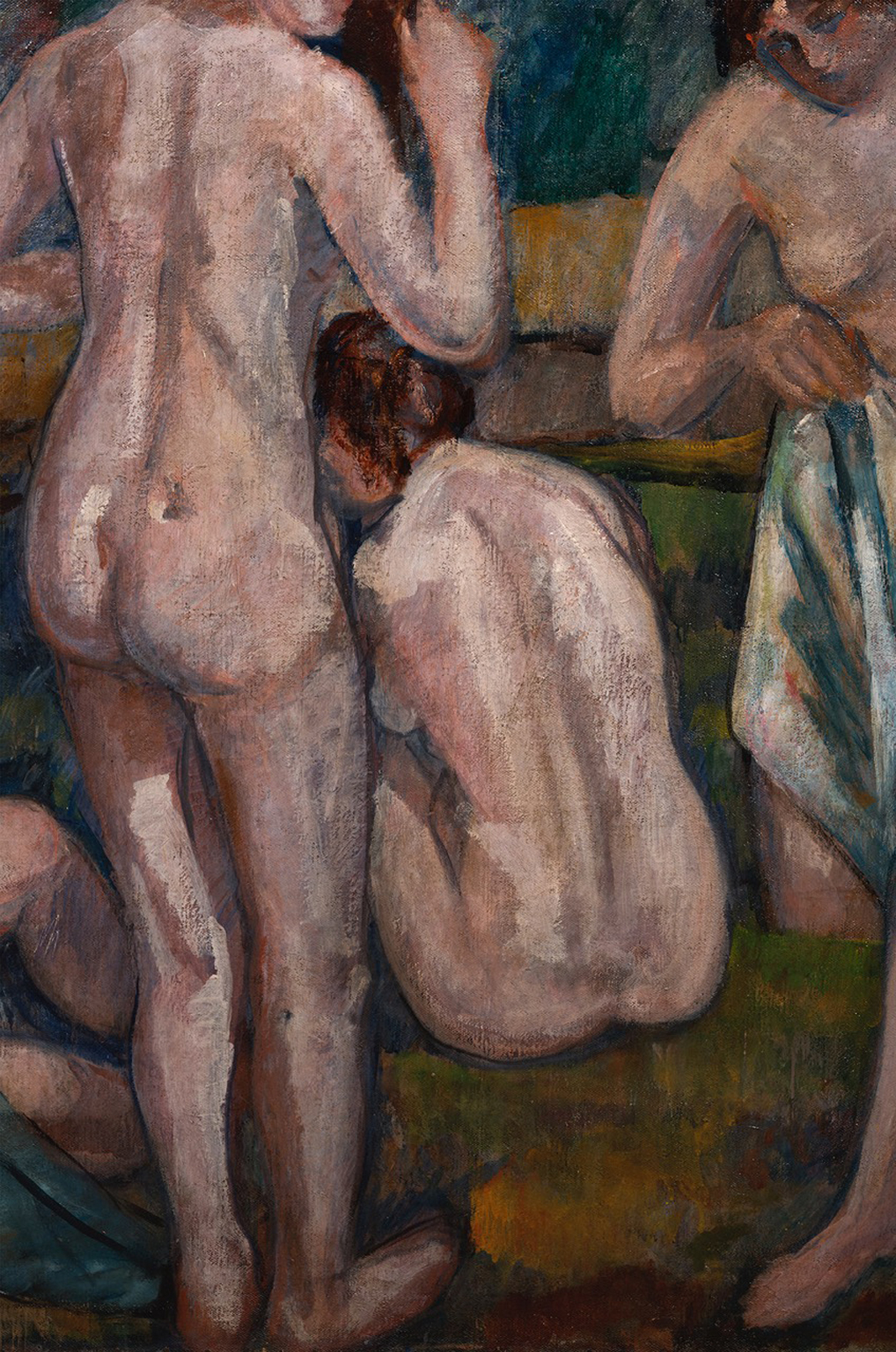
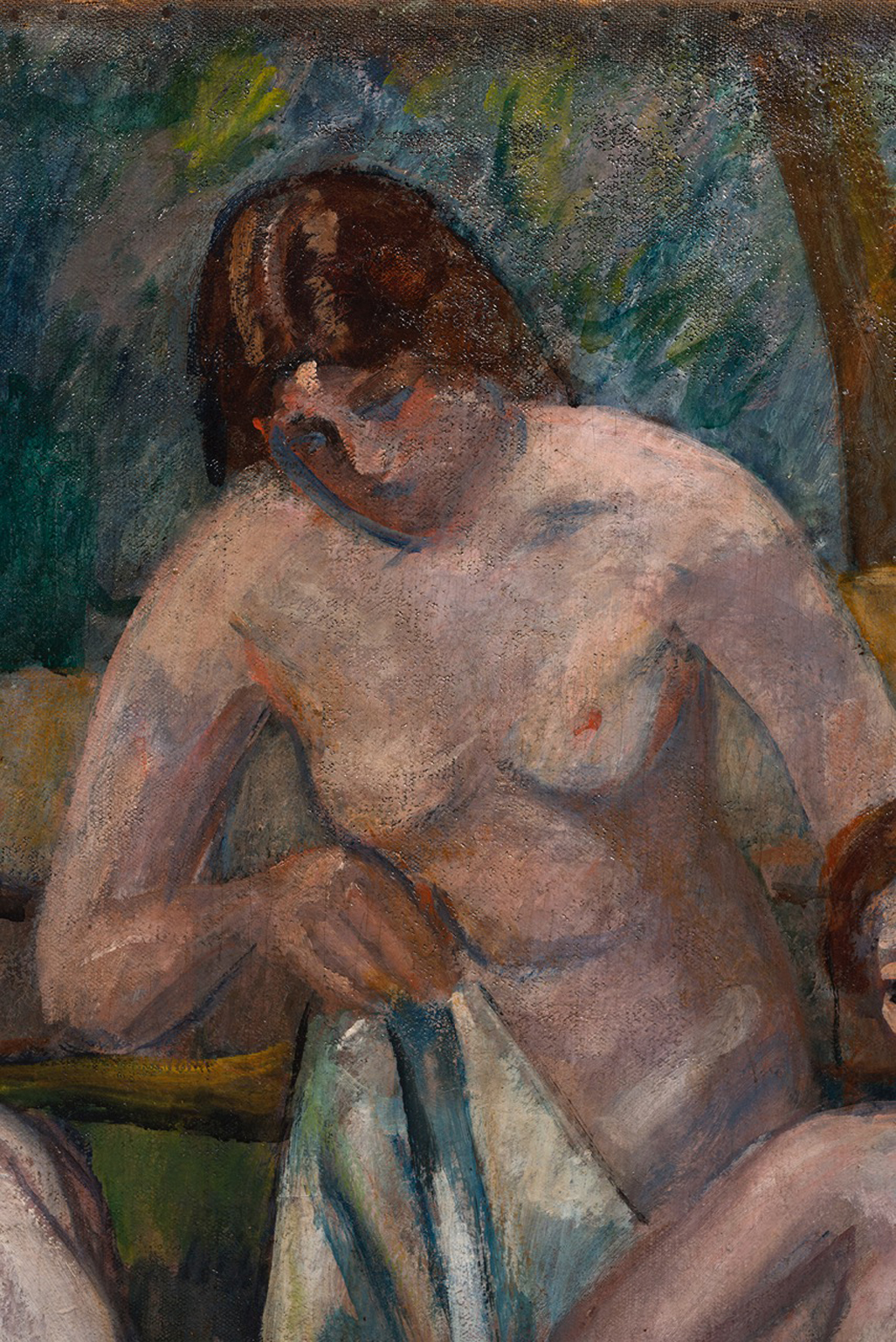
Based on the bathers’ synthetic style and the hatched, Cézanne-like treatment of the landscape in the background, this painting can be dated to around 1906.
Ambitious in its large format, the variety of poses of the six models, and its synthetic treatment of bold modernity, this painting is one of Iturrino’s finest achievements on this theme.
Available